This chapter documents the prevalence of adults with low foundational skills. It examines how the share of adults with low skills has changed over the past decade, and to what extent increases in this share reflect genuine skill deterioration. To evaluate how low skills affect individuals’ lives, the chapter then looks at how these adults fare in terms of labour market participation, wages, self-reported health, life satisfaction, trust and civic engagement.
Navigating Life with Low Literacy and Numeracy
New Results from the 2023 Survey of Adult Skills

Abstract
How many adults have low foundational skills, and why does it matter?
Across the 31 OECD countries and economies that participated in the 2023 Survey of Adult Skills, almost one in three adults displayed low foundational skills, scoring at or below Level 1 in either the literacy or the numeracy assessment. This share ranges from fewer than one in five adults in Finland, Japan, the Netherlands, Norway and Sweden to over three in five adults in Chile.
In 11 of the 27 countries that participated in both Cycle 1 and Cycle 2 of PIAAC, the share of adults with low skills has increased significantly over the past decade (Austria, Czechia, Estonia, Hungary, Israel, Korea, Lithuania, New Zealand, Poland, the Slovak Republic and the United States). In most others, there has been no significant change. Only Denmark and Finland recorded a significant reduction in the share of adults with low foundational skills.
This is partly due to underlying changes in the characteristics of the adult population: accounting for population ageing and the increase in the number of foreign-born adults, seven countries - Canada, Chile, Denmark, England (UK), Finland, Norway and Sweden - show underlying reductions in the share of adults with low skills.
Three in ten adults with low foundational skills do not participate in the labour market, while this is the case for two in ten among adults with intermediate levels of skills (Level 2 and 3 on the PIAAC scale). When they participate in the labour market, adults with low foundational skills earn lower wages than those with medium proficiency (USD 5 less per hour on average). These gaps persist after accounting for age, gender and migration background. The adjusted wage gap is largest in Singapore and Switzerland: USD 10 or more.
Adults with low foundational skills are markedly less likely to report good health or high life satisfaction. They also consistently report lower levels of interpersonal trust, and they are less likely to participate in volunteer activities.
When it comes to political efficacy – the belief in one’s ability to influence political processes - the picture is less clear. On average, differences are modest - 16% of adults with low skills report high political efficacy, compared to 18% of those with medium skills. While in 11 countries adults with low skills are less likely to report high political efficacy than those with medium skills, the reverse is true in Israel and Poland.
The evidence points to an opportunity: there are large returns to foundational skills at the transition from low to medium proficiency. Bringing adults across that threshold represents a point at which investment in foundational skills can yield substantial and wide-ranging individual and societal gains.
Through the Survey of Adult Skills, the OECD Programme for the International Assessment of Adult Competencies (PIAAC) conducts the only internationally comparable assessment of adults’ proficiency in key information-processing skills that underpin effective participation in work, education, and society. The survey is conducted every ten years. Cycle 1 of the survey took place between 2011 and 2018, with 39 countries and economies participating over three rounds of data collection. Cycle 2 has undergone one round of data collection to date, in 2022-23 (hereafter referred to as the “2023 Survey of Adult Skills”), with the participation of 31 countries and economies. These data offer an empirical basis for comparing countries’ human capital, monitoring changes over time and assessing the extent to which education and training systems equip adults with the skills required in increasingly complex and digitalised environments.
A core motivation of PIAAC has been to quantify the share of adults lacking the foundational skills needed for full participation in economic and social life. This remains a key policy concern across countries, given the strong links between weak foundational skills and poorer labour‑market, learning, health, and civic outcomes, as well as heightened vulnerability to economic and technological change (OECD, 2024[1]; Nedelkoska and Quintini, 2018[2]). Reflecting this priority, a central use of PIAAC data has been to identify, support and raise the skill levels of adults with low foundational skills (OECD, 2025[3]).
Assessing foundational skills
The 2023 Survey of Adult Skills assesses adults' proficiency in three core areas: literacy, numeracy, and adaptive problem solving (Table 1.1). Proficiency in each domain is reported on a continuous scale of score points. The scales have been divided into “proficiency levels” separated by score-point thresholds. Six proficiency levels are defined for literacy and numeracy (below Level 1 and Levels 1 to 5) and five for adaptive problem solving (below Level 1 and Levels 1 to 4). These reflect the ability to handle increasingly complex asks, moving from basic, familiar operations (below Level 1) to integrating and evaluating information from multiple sources (at Level 4 and 5).
Source: OECD (2024[4]), Survey of Adult Skills – Reader’s Companion: 2023, OECD Skills Studies, OECD Publishing, Paris
The Survey of Adult Skills is designed to assess the proficiency of all adults, including those with very low skill levels. Cycle 2 of the survey strengthened the measurement at this lower end of the proficiency distribution by expanding the use of component tasks. These tasks target adults with very weak foundational skills and assess the basic cognitive operations that underlie literacy and numeracy. In literacy, reading components capture essential decoding skills through sentence and passage comprehension tasks. Although reading components existed in Cycle 1, Cycle 2 integrated their results into the main literacy scale for the first time, thereby improving the precision of estimates at lower levels. A major innovation in Cycle 2 was the introduction of numeracy components. These tasks assess number sense, such as recognising quantities or identifying the largest number, and feed directly into the numeracy proficiency scale. This allows very low numeracy levels to be measured more accurately. Data from the reading components are used in Chapter 2.
Together, these improvements provide a clearer picture of what adults with very low foundational skills can do and help identify profiles at the lower end of the skill distribution. As these components are now integrated into the main proficiency scales, estimates for adults who only completed components are based on more information than in Cycle 1, when results for a comparable group relied only on individual characteristics reported in the background questionnaire. However, this methodological change warrants caution when analysing trends over time for groups in which such adults are overrepresented. For more detail on comparability between cycles see also Chapter 6 in OECD (2024[4]) and Chapter 3 in OECD (2024[1]).
Defining adults with low skills
One of the core objectives of this report is to study adults with low foundational skills and explore how having low foundational skills affects their work and social lives. The foundational skills assessed in the Survey of Adults Skills are measured on a continuous scale. For the purposes of this report, the criterion adopted to identify and define adults with low skills is performance at or below Level 1 in either literacy or numeracy, as in Grotlüschen et al. (2016[5]).1 Adults performing at these levels typically struggle with tasks such as locating a single piece of explicitly stated information in short texts, understanding simple instructions, filling out basic forms, and carrying out calculations involving whole numbers and common measures. These are the kinds of skills that underpin routine workplace tasks, access to services and independent functioning in modern societies. This definition reflects the fact that both literacy and numeracy are essential for effective participation in the economy and society. Focusing only on adults who are weak in both domains would understate the size of the population facing meaningful barriers.
In this chapter, adults performing at Levels 2 or 3 in both literacy and numeracy (also referred to as adults with medium levels of skills) are used as the main comparison group. Adults with medium skills can understand, interpret, and use information from moderately complex texts, including multi-page documents, digital content, and simple tables or diagrams, often making inferences and disregarding irrelevant details. In numeracy, they can perform multi-step calculations, apply proportional reasoning, interpret graphs and tables, and evaluate quantitative claims in real-world contexts. These skills allow adults to function independently in work, training, and daily life, representing the threshold at which foundational skills support meaningful participation in society and the economy. Medium skills also represent a realistic and policy-relevant target. There are substantial returns to the transition from low to medium proficiency, and bringing adults to this level is a more achievable objective for adult learning systems than aiming for higher proficiency levels.
Objectives of this chapter
This chapter first asks how many adults have low foundational skills, whether the prevalence of low foundational skills has increased over time, and to what extent observed changes in the share of low-skilled adults are driven by demographic change. Second, it documents the economic penalties associated with low skills, particularly in terms of labour market attachment and wages, as well as social penalties, including on health, well-being, and civic participation.
On average, almost one in three (31%) adults in OECD countries had low foundational skills in 2023. There is substantial variation even among countries with similar levels of development, with some having been more successful in ensuring that adults reach basic levels of literacy and numeracy (Table 1.3). In five countries – Finland, Japan, Norway, Sweden and the Netherlands – fewer than 20% of adults had low literacy or numeracy skills. At the other end of the spectrum, close to 50% or more of all adults had low foundational skills in Chile, Poland and Portugal. This highlights the severity of the challenges faced by some countries, as well as the potential to learn from the policies of countries where low skills are less prevalent.
Percentage of adults scoring at or below Level 1 in literacy or numeracy, by country, 2023
Source: OECD (2024), Survey of Adult Skills (PIAAC) database, http://www.oecd.org/skills/piaac/publicdataandanalysis/, Annex Table A.1.1
How do doorstep respondents affect the share of adults with low skills?
In Cycle 1, adults who were unable to complete the background questionnaire due to language barriers were designated as literacy-related non-respondents, received no proficiency estimates, and were effectively excluded from the sample. In most countries, this group was small, but in several it exceeded 5% of respondents (OECD, 2019[6]). Their systematic exclusion in Cycle 1 meant that proficiency estimates understated the share of adults at the very bottom of the skills distribution in countries with significant language-minority or recently arrived migrant populations.
A key change in Cycle 2 was the introduction of a doorstep interview: a short tablet-based questionnaire available in 43 languages, designed to capture basic demographic and socio-economic information from adults who could not engage with the full assessment (Box 1.1, see also OECD (2024[4])).2 Proficiency estimates were then generated for these respondents based on their background characteristics, allowing them to be placed on the PIAAC scale.3
The inclusion of these respondents in Cycle 2 has direct implications for the measurement of low skills. Since doorstep respondents are almost all located at the bottom of the proficiency distribution, their addition to the sample increases the measured share of adults with low skills. On average across OECD countries, doorstep respondents account for 1.6 percentage points of the 31% low-skill prevalence rate. A separate group - adults who completed the background questionnaire but not the cognitive assessment - accounts for a further 1.6 percentage points.4 Together, these two groups contribute 3.1 percentage points to the OECD average low-skill prevalence rate, with the remaining 27.8 percentage points coming from adults who completed the assessment (Figure 1.1).
Percentage of adults scoring at or below Level 1 in literacy or numeracy, by assessment participation mode, 2023
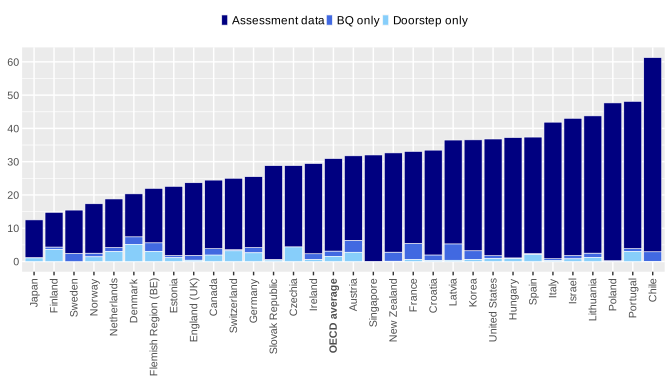
Note: All respondents, including participants taking the doorstep interview only; the background questionnaire (BQ) only and those taking the full assessment
Source: OECD (2024), Survey of Adult Skills (PIAAC) database, http://www.oecd.org/skills/piaac/publicdataandanalysis/, Annex Table A.1.3
The contribution of doorstep respondents to low-skill prevalence varies considerably across countries. In most countries, it is below 2 percentage points. It is largest in Denmark (5.2 percentage points), Czechia (4.4 points) and Finland (3.6 points). In Chile, Poland, Sweden and Singapore it is zero or close to zero. Background-questionnaire-only respondents add most to measured prevalence in France (4.9 percentage points), Latvia (4.9 points) and Austria (3.6 points), reflecting country-specific patterns in assessment non-completion.
Across participating countries, 1.7% of respondents completed the doorstep interview. No doorstep interviews were conducted in Sweden, where the systematic use of interpreters enabled full participation in the background questionnaire, and in Singapore. The highest shares of doorstep respondents were observed in Denmark (5.3%), Czechia (4.5%) and Finland (3.7%).
Doorstep respondents are a distinct group within the surveyed population. 91% were born outside the country where the survey was conducted, compared with 15% of adults who completed the regular background questionnaire - a contrast that reflects the central role of language barriers in limiting participation. The share born abroad varies across countries but is high throughout, ranging from 100% in Hungary and Norway to 65% in Korea. Recent arrival is another defining feature: among migrant doorstep respondents, only 49% had lived in the host country for more than five years, compared with 80% of migrants who completed the full assessment.
Educational profiles are more varied than might be expected: a higher-than-average share has very low formal education, but 31% have attained ISCED Level 4 or above. More than 50% hold a qualification at ISCED Level 4 or above – meaning at least a post-secondary qualification – in Estonia, Finland, Hungary, the Flemish Region of Belgium and the Netherlands, but only 2% do in Italy. This indicates that exclusion from the full assessment reflects language barriers rather than educational disadvantages in many contexts.
Labour market disadvantage is more consistent: doorstep respondents are less likely to be in full-time employment (48% versus 57%) and twice as likely to be unemployed (12% versus 6%), patterns that hold across all participating countries.
In sum, the doorstep instrument disproportionately captures adults in the early stages of arrival, for whom language acquisition and labour market integration are still in progress.
Source: Annex Tables A.1.2 and A.1.4.
In 11 of the 27 countries that participated in both Cycle 1 and Cycle 2 of the Survey of Adult Skills, the share of adults with low skills has increased significantly over the past decade. In most of the remaining countries, there has been no significant change, while two recorded a significant decline. To ensure comparability across cycles, this analysis excludes adults who completed only the doorstep interview, as no equivalent group exists in Cycle 1 data. 5
From a policy perspective, the key question is whether this trend reflects a deterioration in adults' skills or is primarily driven by changes in the demographic composition of the adult population. A simple comparison of the share of adults with low skills in Cycle 1 and Cycle 2 shows that only two countries – Denmark and Finland - have experienced a statistically significant reduction over the decade (Figure 1.2). At the other end of the spectrum, statistically significant increases were observed in Austria, Czechia, Estonia, Hungary, Israel, Korea, Lithuania, New Zealand, Poland, the Slovak Republic and the United States. Among these, Austria, Hungary, Korea, Lithuania, New Zealand, Poland and the Slovak Republic saw the largest increases with over 10 percentage points. In the remaining countries, changes in either direction are not statistically significant. Taken at face value, these results suggest broad‑based weakening of skills in many countries, but these raw figures do not account for the possibility that changes in the age structure and migration background of the adult population between cycles may be driving the observed trend.
The interpretation of trends changes markedly once differences in population structure across cycles are considered. When Cycle 2 data are reweighted to reflect the demographic composition of Cycle 1, seven countries – Canada, Chile, Denmark, England (UK), Finland, Norway and Sweden – show statistically significant declines in the prevalence of low skills. In several of these cases, unadjusted estimates pointed to stagnation or modest deterioration. However, the reweighted results suggest that improvements in foundational skills were occurring within comparable population groups, but that these gains were offset by shifts in age distribution and migration patterns at the aggregate level. For instance, older adults, who generally have lower skill levels, may have represented a larger proportion of the population in Cycle 2. If one holds this proportion constant, it becomes apparent that skill levels within age groups were indeed improving.
Percentage-point change in the share of adults scoring at or below 1 in literacy or numeracy, raw and reweighted, Cycle 1 to Cycle 2
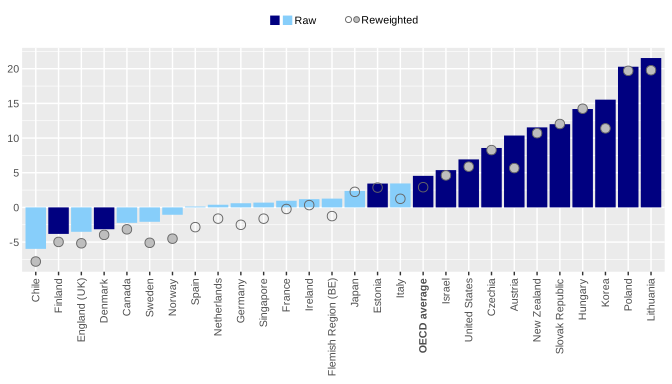
Note: Low literacy and numeracy skills are defined as at or below Level 1; Cycle 2 data is reweighted to match the distribution of Cycle 1 with regards to age, gender and migration background; excludes doorstep respondents
Source: OECD (2024), Survey of Adult Skills (PIAAC) database, http://www.oecd.org/skills/piaac/publicdataandanalysis/, Annex Table A.1.5
This highlights the importance of accounting for demographic change when assessing skill trends over time. In Austria, for example, a raw increase of around ten percentage points is reduced to approximately six percentage points once demographic change is accounted for. In Norway and Sweden, where raw changes are not statistically significant, reweighting reduces of the share of adults with low skills by around five percentage points. However, for Czechia, Hungary, and the Slovak Republic, reweighting makes little difference to the estimated increase, indicating that demographic change explains almost none of the deterioration observed and that these countries have experienced a genuine, broad-based weakening of foundational skills between Cycle 1 and Cycle 2 of the Survey of Adult Skills.
The aggregate picture is therefore shaped as much by who is in the population as by how skills within groups are changing. Interpreting national skill profiles without accounting for demographic context risks conflating population composition with education and training system performance.
Cycle 1 was conducted in three rounds between 2011 and 2018 across 39 countries, with around 245 000 adults interviewed, representing approximately 1.15 billion people. Cycle 2 has so far been implemented in 31 countries and economies, with the first round of data collection carried out in 2022‑23, representing approximately 673 million adults worldwide.
In designing Cycle 2, substantial efforts were made to preserve comparability with Cycle 1. Survey operations, sampling strategies and field procedures remained largely unchanged, and the background questionnaire and core literacy and numeracy assessments retained many items from Cycle 1. These shared “trend items” provide the psychometric basis for placing results from both cycles on a common scale, with uncertainty from changes in the assessment explicitly accounted for through a linking error.
At the same time, several methodological innovations were introduced to improve the relevance, coverage and inclusiveness of the assessment. The literacy and numeracy frameworks were updated to better reflect the increased role of digital information and tasks in everyday life, resulting in assessments that are comparable but not identical across cycles. Cycle 2 also incorporated results from literacy and numeracy component assessments into proficiency estimates for adults at the very bottom of the skills distribution, improving measurement precision for this group while complicating comparisons for certain subpopulations. In addition, the assessment moved fully to tablet-based delivery, and a new multilingual “doorstep interview” was introduced to reduce literacy-related non‑response among adults unable to complete the main survey.
These improvements strengthen the overall quality and coverage of Cycle 2 results, but they also imply that changes over time should be interpreted with care. Comparisons across cycles are most robust when they focus on broad population patterns and account for demographic change, measurement uncertainty and methodological updates, rather than small differences in point estimates or subgroup trends that may be sensitive to these design changes.
Source: OECD (2024[1]).
The sections that follow examine how having low foundational skills is associated with a range of economic and non-economic outcomes, comparing adults with low proficiency to those with medium proficiency. This comparison is made as medium proficiency represents a realistic and policy-relevant threshold, reflecting the level at which foundational skills allow for independent functioning in work, learning and daily life. The gap between low and medium proficiency therefore provides an empirical indication of the outcomes associated with crossing that threshold, without implying that higher proficiency carries no further returns.
Economic outcomes of adults with low skills
The labour market consequences of low foundational skills operate through two distinct channels: the likelihood of being employed, and the terms on which employment is obtained. As low skills are closely linked to lower qualifications, the associated economic penalties also partly reflect the lower returns to formal educational attainment.
The analysis that follows examines inactivity, unemployment and wages in turn, drawing on comparisons between adults with low and medium proficiency.
Inactivity and unemployment
Across OECD countries, adults with low skills are substantially more likely to be inactive than those with medium skills. Inactivity encompasses adults who are neither employed nor actively seeking work. It includes adults who have withdrawn due to discouragement, health limitations, caregiving responsibilities, a lack of skills that employers value or retirement. The relationship between low foundational skills and inactivity is bidirectional: limited skills reduce labour market participation, while a lack of participation hinders skill development. On average, around 30% of adults with low skills are inactive in the labour market, compared to around 19% of those with medium skills.
In 27 out of 31 countries, there is a statistically significant difference in the adjusted inactivity rates6 between adults with low skills and adults with medium skills (Figure 1.3). No significant differences are observed in four countries – Chile, Japan, Korea and Singapore. The largest adjusted differences between adults with low and medium skills are observed in England (UK), Germany, the Netherlands and the United States. In these countries, the difference in inactivity rates between the two groups exceeds 15 percentage points, with adults in the medium-skilled category being approximately half as likely to be inactive.
Although skill-related differences in unemployment rates exist, they are less pronounced and less consistently significant than the differences observed for inactivity (Figure 1.3). On average, around 8% of adults with low skills are unemployed, compared to approximately 5% of those with medium skills. However, unemployment gaps are only statistically significant in 12 out of 31 countries. One possible explanation for this is that many countries were experiencing historically tight labour markets with low unemployment rates across all skill groups at the time the data was collected. The largest adjusted differences in unemployment rates between adults with low and medium skills are observed in England (UK), Estonia, Germany, Italy and Spain, where they exceed five percentage points.
Adjusted difference in inactivity and unemployment rates between adults with low and medium foundational skills, percentage points, 2023
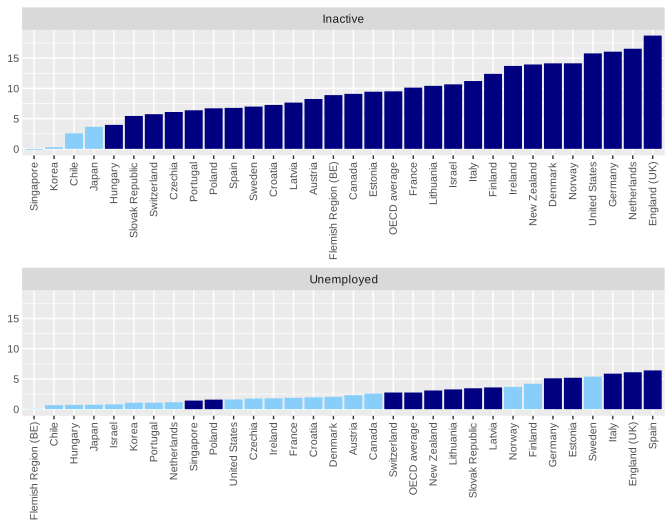
Note: Low skills are defined as having at most Level 1 proficiency in literacy or numeracy; medium skills are defined as having Level 2 or Level 3 proficiency in literacy and numeracy; adjustments were made for age, gender and migration background; dark bars indicate differences that are statistically significant at the 5% level
Source: OECD (2024), Survey of Adult Skills (PIAAC) database, http://www.oecd.org/skills/piaac/publicdataandanalysis/, Annex Table A.1.6
Wages
There are pronounced and consistent wage disparities between low- and medium-skilled adults across countries. On average, adults with low skills earn USD 20.5 per hour, compared to USD 25.5 for those with medium skills (see Annex Table A1.7). While absolute wage levels vary widely - from USD 10 per hour for adults with low skills in Chile to USD 32 in Denmark - adults with medium skills earn more than those with low skills everywhere. The gap between the two groups is particularly large in Chile and Singapore, where those with medium skills earn over 50% more than their peers with low skills. Even in Poland, where the difference between both groups is smallest, adults with medium skills earn 8% more per hour.
The largest adjusted wage difference exceeds USD 10 per hour in Singapore and Switzerland (Figure 1.4). By contrast, the difference is USD 2 or less in Croatia, Italy, Poland, and the Slovak Republic. After adjusting for differences in age, gender and migration background, no significant wage gap between adults with low and medium skills is observed in Korea and the United States. These findings suggest that the extent to which employers reward skills varies considerably across countries. While countries with more dispersed wage distributions often exhibit larger skill-related gaps, this alone cannot explain cross-country variation. For instance, Switzerland has one of the largest adjusted wage differences despite its relatively compressed wage structure. The influence of wage-setting institutions, occupational composition, sectoral specialisation and differences in the demand for skills on the wage returns associated with foundational skills is also likely.
Adjusted difference in hourly wages (USD PPP) between adults with low and medium foundational skills, by country, 2023
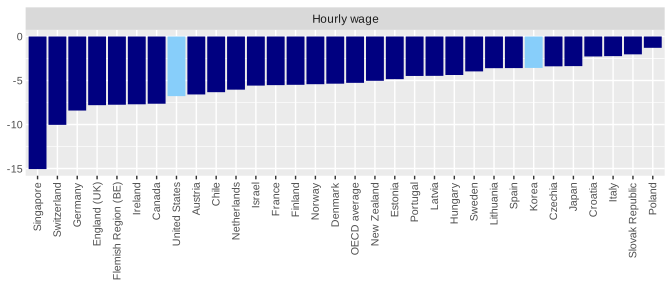
Note: Low skills are defined as having at most Level 1 proficiency in literacy or numeracy; medium skills are defined as having Level 2 or Level 3 proficiency in literacy and numeracy; adjustments were made for age, gender and migration background; dark bars indicate differences that are statistically significant at the 5% level
Source: OECD (2024), Survey of Adult Skills (PIAAC) database, http://www.oecd.org/skills/piaac/publicdataandanalysis/, Annex Table A.1.7
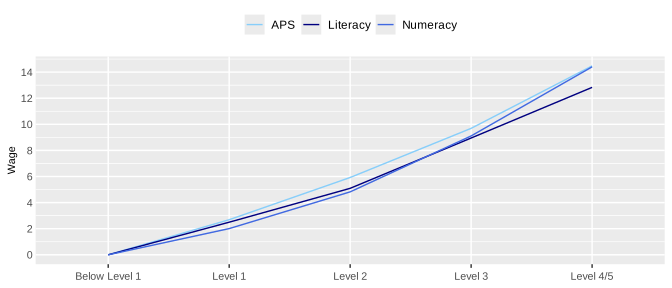
The wage premium associated with medium proficiency relative to low proficiency represents only part of the return to foundational skills. Examining wage gradients across the full proficiency distribution reveals that returns continue at higher levels, though their structure differs across domains (Figure 1.5). In literacy, the steepest wage increase occurs between Levels 2 and 3, with more moderate gains above that threshold. Numeracy shows a steeper upward gradient, with notably higher returns at the top of the distribution, suggesting that advanced quantitative skills carry a distinct labour market premium. Adaptive problem solving shows the flattest profile, with more gradual wage increases across levels.
In sum, there is a substantial increase in wages when moving from low to medium skills and this increase continues at higher proficiency levels, especially for numeracy.
Hourly wage premium (USD PPP) by proficiency level in literacy, numeracy and adaptive problem solving, relative to below Level 1, OECD average, 2023
Source: OECD (2024), Survey of Adult Skills (PIAAC) database, http://www.oecd.org/skills/piaac/publicdataandanalysis/, Annex Table A.1.8
Non-economic outcomes of adults with low skills
The economic penalties associated with low foundational skills are substantial, but they do not capture the full extent of the disadvantage experienced by affected adults. Literacy and numeracy are also closely associated with how adults navigate health systems, engage with public institutions, and participate in community life. This section exploits information collected in the Survey of Adult Skills on two clusters of non-economic outcomes: well-being, comprising life satisfaction and self-reported health, and civic engagement, comprising political efficacy, interpersonal trust, and volunteering.
The 2023 Survey of Adult Skills collected data on five non-economic outcomes: political efficacy, interpersonal trust, volunteering, self-reported health and life satisfaction. Some measures were retained from Cycle 1, while others were introduced or modified:
Life satisfaction: Respondents rated their overall life satisfaction on a scale from 0 (extremely dissatisfied) to 10 (extremely satisfied). For this report, scores of 7 or above are classified as high life satisfaction. On average, 75% of respondents across participating OECD countries and economies fall into this category.
Self-reported health: Respondents assessed their health on a five-point Likert scale (excellent, very good, good, fair or poor). Responses of “very good” or “excellent” are considered a positive health outcome. On average, 41% of adults report such levels of health.
Political efficacy: Respondents indicated, on a scale from 0 to 10, the extent to which they feel that people “like them” have a say in what government does. Scores of 7 or higher are categorised as high political efficacy; on average, 19% of adults fall in this category.
Interpersonal trust: Respondents rated their position on a scale from 0 (“you can’t be too careful”) to 10 (“most people can be trusted”). Scores of 7 or above are classified as high trust. On average, 36% of adults report high levels of trust.
Volunteering: Participation is measured on a five-point frequency scale (never; less than once a month; at least once a month but less than once a week; at least once a week but not daily; every day). For analytical purposes, any reported volunteering activity in the past year is counted towards the outcome. On average, 32% of adults report some level of engagement.
Source: OECD (2024[1]).
Well-being
A substantial body of research links higher levels of education and cognitive skills to healthier behaviours, more effective use of healthcare services and longer life expectancy (Carneiro, Crawford and Goodmann, 2007[7]; Deming, 2009[8]; Kakarmath et al., 2018[9]).7 However, the relationship between skills and well-being is also influenced by differences in the demographic composition of skill groups. Adults with low foundational skills are disproportionately likely to be older or have a migration background (see also Chapter 3), characteristics that may independently affect health outcomes and well-being. More broadly, well-being is shaped by a wide range of factors beyond skills, including family and household circumstances, social connections, physical and mental health, employment conditions, and financial security. Differences in well-being across skill groups therefore reflect not only disparities in skills themselves, but also the broader economic and social environments in which individuals live.
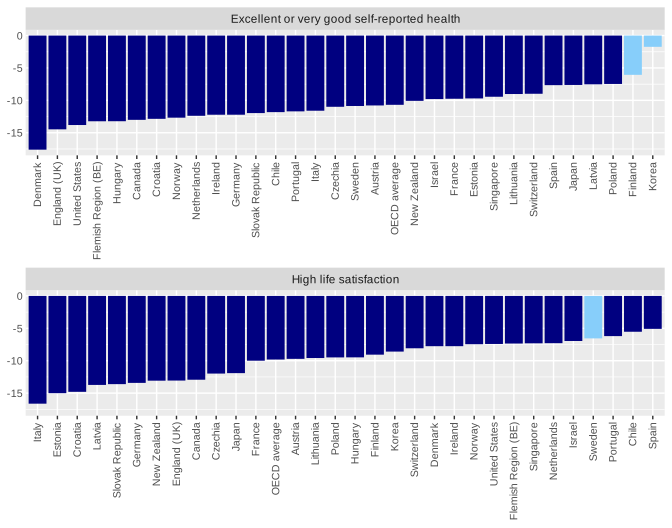
Across OECD countries, adults with low skills are markedly less likely to report being in very good or excellent health than those with medium proficiency.8 On average, 33% of adults with low skills report very good or excellent health, compared to 47% of adults with medium skills. The cross-country variation is substantial. Among adults with low skills, the share ranges from 12% in Latvia to 63% in Israel. Among medium-skilled adults, it ranges from 21% in Korea to 78% in Israel. These differences persist after accounting for age, gender and migration background and are statistically significant in most countries (Figure 1.6). The difference in adjusted self-reported health outcomes is largest in Denmark: 18 percentage points. By contrast, there are not significant differences between groups in Finland and Korea.
A similar pattern emerges for life satisfaction. On average, 67% of adults with low skills report high life satisfaction, compared to 77% of those with medium skills. Cross-country differences are again wide. Among adults with low skills, more than 80% report high life satisfaction in Denmark and Finland, compared with only 38% in Japan. Among medium-skilled adults, shares above 85% are observed in Finland, the Netherlands and Switzerland. Adjusted gaps in life satisfaction also vary between countries (Figure 1.6). Differences exceeding 15 percentage points are observed in Estonia and Italy, whereas no significant differences in life satisfaction between adults with low and medium skills are found in Sweden.
Adjusted differences in shares reporting very good/excellent health and high life satisfaction between adults with low and medium foundational skills; percentage points, 2023
Note: Low skills are defined as having at most Level 1 proficiency in literacy or numeracy; medium skills are defined as having Level 2 or Level 3 proficiency in literacy and numeracy; adjustments were made for age, gender and migration background; dark bars indicate differences that are statistically significant at the 5% level
Source: OECD (2024), Survey of Adult Skills (PIAAC) database, http://www.oecd.org/skills/piaac/publicdataandanalysis/, Annex Table A.1.9
Overall, moving beyond the lowest proficiency levels is associated with better self-reported health and higher life satisfaction. In most countries, these associations remain statistically significant after accounting for differences in age, gender and migration background. However, the magnitude of the relationship varies considerably across countries. These cross-country patterns should be interpreted with caution. Smaller gaps may reflect more equal distributions of well-being across skill groups, but they may also partly result from differences in reporting behaviour. This may be particularly relevant for self-reported health measures in countries such as Korea, where cultural norms can influence response patterns. Taken together, the findings suggest that while skill proficiency is consistently associated with health and well-being outcomes, the strength of this relationship depends on the broader institutional, social and economic context in which individuals live.
Civic engagement
Evidence from Cycle 1 of PIAAC showed that trust is positively associated with educational attainment and literacy proficiency. Subsequent research suggests that education can foster the cognitive and social abilities necessary for establishing and maintaining trust (Borgonovi and Burns, 2015[10]; Borgonovi and Pokropek, 2022[11]). Information-processing skills have also been linked to political efficacy, though this appears weaker in contexts characterised by a strong rule of law and low perceived corruption (Borgonovi and Pokropek, 2017[12]). These findings suggest that foundational skills may be connected not only to economic and personal well-being, but also to civic attitudes and behaviours. At the same time, these outcomes are also shaped by the characteristics of the populations with low skills themselves - including age, migration background, and socio-economic conditions - as discussed in Chapter 3.
This section examines three indicators from the 2023 Survey of Adult Skills: political efficacy, interpersonal trust, and volunteering. As with other self-reported measures, responses may reflect contextual and cultural factors. However, comparisons between adults with low and medium skills within countries provide insight into how foundational skills are associated with civic engagement.
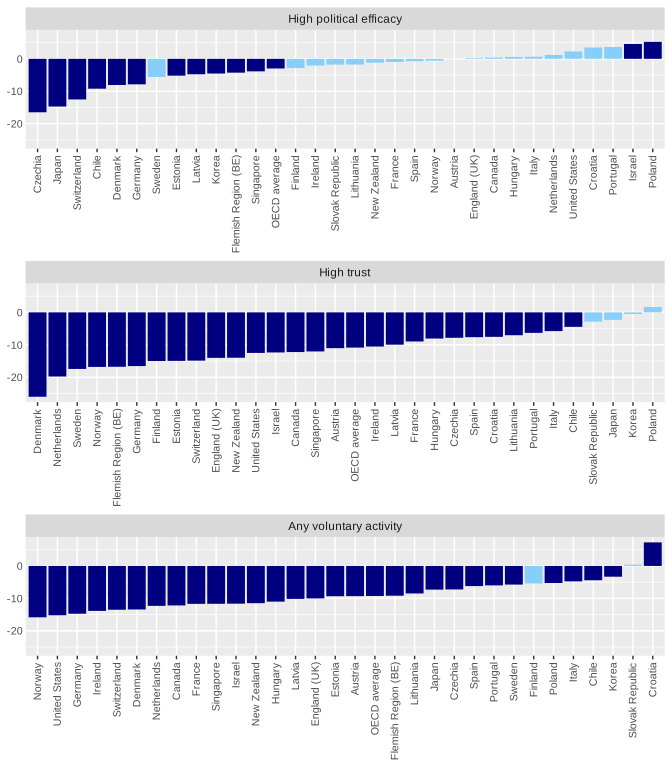
On average across OECD countries, differences in reported political efficacy between adults with low and medium skills are modest. Around 16% of adults with low skills report high political efficacy, compared to 18% of those with medium skills. This small average gap reflects variation between countries. In 11 countries, adults with low foundational skills report significantly lower levels of political efficacy than those with medium skills. The largest gaps observed in the Czechia, Japan and Switzerland (Figure 1.7). In two countries – Israel and Poland – adults with low skills are significantly more likely than those with medium skills to report high political efficacy. This pattern, also observed in previous OECD reports (OECD, 2024[1]), highlights that the relationship between skills and perceived political influence is not consistently positive. Institutional trust, political culture, and perceptions of fairness may influence how skills translate into feelings of efficacy.
The link between skills and interpersonal trust is clearer. On average, 25% of adults with low skills report high levels of trust, compared to 35% of those with medium skills. Close to one in two adults with low foundational skills reports high levels of trust in Finland, Korea and Norway, whereas in Chile that number is less than one in ten. Amongst adults with medium skills, highest levels of trust are reported in Denmark, Finland and Norway. After adjusting for age, gender and migration background, substantial and significant gaps remain in many countries. The largest adjusted difference, by a vast margin, is observed in Denmark (26 percentage points). No significant differences between adults with low and medium foundational skills are found in Japan, Korea, Poland and the Slovak Republic (Figure 1.7). Overall, trust shows a more consistently linear relationship with skill level than political efficacy. Two mechanisms may contribute to this pattern: adults with low skills may live in social environments where trust is less prevalent, and foundational skills may support the interpersonal capacities – reading social cues, communicating across difference – that sustain trust. The data do not allow these explanations to be distinguished, and both may operate simultaneously.
The level of engagement in voluntary activities also differs according to skill level. On average, 23% of adults with low skills report participating in volunteering activities, compared to 33% of those with medium skills. Among adults with low skills, volunteering rates exceed one in three in Finland, New Zealand, Norway and the United States. The highest participation rates among medium-skilled adults are observed in New Zealand, Norway and the United States. The largest adjusted differences between groups are observed in Germany, Norway and the United States, where adults with medium skills are over 15 percentage points more likely to volunteer than their peers with low skills (Figure 1.7). In contrast, there is no difference in volunteering between skill groups in Finland and the Slovak Republic. Notably, Croatia presents an exception: adults with medium skills are around 7 percentage points less likely to report volunteering than those with low skills.
Taken together, foundational skills are positively associated with interpersonal trust and volunteering across most countries, but the relationship with political efficacy is inverted in several cases. Trust and volunteering are behaviours that tend to be reinforced by social networks, workplace integration and community participation, all of which are more accessible to adults with stronger skills and more stable labour market attachment. This is consistent with a broader literature linking education and literacy to social capital accumulation: stronger skills support the repeated cooperative interactions through which generalised trust develops (Putnam, 2000[13]) and enable more confident engagement with voluntary associations (Verba, Schlozman and Brady, 1995[14]). Using PIAAC data from Cycle 1, Borgonovi and Burns (2015[10]) show directly that literacy strengthens interpersonal trust both through its cognitive effects and indirectly through workplace and social habits.
Political efficacy, by contrast, reflects perceived influence over government, which is shaped as much by institutional design, political culture and perceived fairness as by individual capability. The observed pattern is difficult to interpret. In contexts where political institutions are perceived as responsive, adults across the skills distribution may feel a degree of political influence, which could explain why adults with low skills in some countries report efficacy levels comparable to or exceeding those of medium-skilled peers. An alternative reading is that higher reported efficacy among adults with low skills in certain countries reflects limited capacity to assess the extent to which political processes represent their interests rather than meaningful civic empowerment. The data do not allow these interpretations to be distinguished.
Adjusted difference in shares reporting high interpersonal trust, high political efficacy and any volunteering between adults with low and medium foundational skills, percentage points, 2023
Note: Low skills are defined as having at most Level 1 proficiency in literacy or numeracy; medium skills are defined as having Level 2 or Level 3 proficiency in literacy and numeracy; adjustments were made for age, gender and migration background, dark bars indicate differences that are statistically significant at the 5% level
Source: OECD (2024), Survey of Adult Skills (PIAAC) database, http://www.oecd.org/skills/piaac/publicdataandanalysis/, Annex Table A.1.10
References
[10] Borgonovi, F. and T. Burns (2015), “The educational roots of trust”, OECD Education Working Papers, No. 119, OECD Publishing, Paris, https://doi.org/10.1787/5js1kv85dfvd-en.
[11] Borgonovi, F. and A. Pokropek (2022), “The Role of Birthplace Diversity in Shaping Education Gradients in Trust: Country and Regional Level Mediation-Moderation Analyses”, Social Indicators Research, Vol. 164/1, pp. 239-261, https://doi.org/10.1007/s11205-022-02948-z.
[12] Borgonovi, F. and A. Pokropek (2017), “Mind that gap: The mediating role of intelligence and individuals’ socio-economic status in explaining disparities in external political efficacy in 28 countries”, Intelligence, Vol. 62, pp. 125-137, https://doi.org/10.1016/j.intell.2017.03.006.
[15] Bundesamt für Statistik (2025), Leben mit geringen Lese-, Alltagsmathematik- und Problemlösekompetenzen in den Jahren 2022/2023, https://www.sem.admin.ch/dam/sem/de/data/publiservice/service/forschung/2025-piaac-vertiefungsstudie-leben.pdf.download.pdf/2025-piaac-vertiefungsstudie-leben-d.pdf.
[7] Carneiro, P., C. Crawford and A. Goodmann (2007), “The impact of early cognitive and noncognitive skills on later outcomes”, CEE Discussion Paper, No. 92, London School of Economics: Centre for the Economics of Education, https://eprints.lse.ac.uk/19375/1/The_Impact_of_Early_Cognitive_and_Non-Cognitive_Skills_on_Later_Outcomes.pdf.
[8] Deming, D. (2009), “Early Childhood Intervention and Life-Cycle Skill Development: Evidence from Head Start”, American Economic Journal: Applied Economics, Vol. 1/3, pp. 111-134, https://doi.org/10.1257/app.1.3.111.
[5] Grotlüschen, A. et al. (2016), “Adults with Low Proficiency in Literacy or Numeracy”, OECD Education Working Papers, No. 131, OECD Publishing, Paris, https://doi.org/10.1787/5jm0v44bnmnx-en.
[9] Kakarmath, S. et al. (2018), “Association between literacy and self-rated poor health in 33 high-and upper-middle-income countries”, OECD Education Working Papers, No. 165, OECD Publishing, Paris, https://doi.org/10.1787/7aaeac27-en.
[2] Nedelkoska, L. and G. Quintini (2018), “Automation, skills use and training”, OECD Social, Employment and Migration Working Papers, No. 202, OECD Publishing, Paris, https://doi.org/10.1787/2e2f4eea-en.
[3] OECD (2025), From data to skills policy: How the Survey of Adult Skills supports policymaking, https://www.oecd.org/content/dam/oecd/en/about/programmes/edu/piaac/brochures/from-data-to-skills-policy.pdf.
[1] OECD (2024), Do Adults Have the Skills They Need to Thrive in a Changing World?: Survey of Adult Skills 2023, OECD Skills Studies, OECD Publishing, Paris, https://doi.org/10.1787/b263dc5d-en.
[4] OECD (2024), Survey of Adult Skills – Reader’s Companion: 2023, OECD Skills Studies, OECD Publishing, Paris, https://doi.org/10.1787/3639d1e2-en.
[6] OECD (2019), The Survey of Adult Skills : Reader’s Companion, Third Edition, OECD Skills Studies, OECD Publishing, Paris, https://doi.org/10.1787/f70238c7-en.
[13] Putnam, R. (2000), Bowling Alone: The Collapse and Revival of American Community., Simon & Schuster.
[14] Verba, S., K. Schlozman and H. Brady (1995), Voice and Equality, Harvard University Press, https://doi.org/10.2307/j.ctv1pnc1k7.
← 1. Alternative definitions used in international and national PIAAC reports include: ‘Low-performing adults’ as those who score at the two lowest levels in all skills domains (OECD, 2024[1]; Bundesamt für Statistik, 2025[15]).
← 2. The doorstep interview was available in the official languages of all 31 countries and economies participating in the survey, as well as the languages of the most important linguistic minorities in each country.
← 3. Doorstep respondents do not pass any cognitive assessment because they do not speak the language of the test well enough. Only background characteristics are collected. Their proficiency is therefore imputed based on these, taking the performance of respondents who only took the components in the direct assessment (path 1) as a reference. This group has overwhelmingly low skills.
← 4. For adults who did not participate in the assessment but completed the background questionnaire, proficiency values were imputed based on a range of background characteristics. The background questionnaire was administered by an interviewer, while the cognitive assessment was self-administered on a tablet in the interviewer’s presence. In most countries, the background questionnaire and assessment were conducted in the same language; exceptions include Sweden, which allowed the use of translators for the background questionnaire, and Norway and the United States, which offered the background questionnaire in additional languages. There are several reasons why some respondents did not proceed to the assessment, including limited proficiency in the assessment language and insufficient digital skills to complete the tablet-based test.
← 5. It should be noted that Denmark had an exceptionally high number of doorstep interviews in Cycle 2, due to the decision to oversample the immigrant population. These doorstep interviews are excluded from the trend comparison, and the trend comparison is solely based on individuals who completed the background questionnaire and/or the assessment. This should be taken into account when comparing the results of both cycles for Denmark.
← 6. The analysis accounts for differences in age, gender, and migration background between low and medium skills adults.
← 7. The 2023 Survey of Adult Skills includes information on self-reported health and life satisfaction. Because both measures rely on self-assessments, cross-country comparisons should be interpreted with caution, as cultural response patterns may influence how individuals rate their well-being. Differences observed within countries between adults with low and medium skills, however, are less likely to reflect such reporting biases and provide more robust evidence on the association between foundational skills and well-being.
← 8. Job characteristics also shape health outcomes: adults with low foundational skills are more likely to work in higher-risk occupations than those with higher skills.