This chapter investigates the uptake of responsible business conduct (RBC) due diligence by the largest 10 000 globally listed companies based on public disclosures. It finds that commitments to RBC on environmental and social issues have become mainstream. But across all regions, an implementation gap exists between commitments and practices. While reported uptake of RBC in company commitments and management systems is high, a minority of companies report measures to meaningfully identify and address adverse impacts, especially concerning impacts on human rights and in the supply chain. Additional evidence shows that the share of companies reporting that they have a significant negative impact on a given sustainability issue often exceeds the share of companies that identify that issue as posing a material financial risk for the company, particularly for impacts related to workers in own operations and the value chain and environmental topics such as biodiversity, water and circularity.
OECD Responsible Business Outlook 2026

Abstract
This chapter provides an overview of the global uptake of environmental and social due diligence by large, listed companies. It draws on publicly disclosed information and covers the largest 10 000 listed companies globally with a total market capitalisation of USD 145 trillion, accounting for 96% of global market capitalisation. These companies are headquartered across 107 countries, spanning a range of sectors and sizes, including small-caps (35% of the sample for this study), mid-caps (44%) and large‑caps (20%).1 State‑owned enterprises (SOEs) make up 14% of the sample for this report.2 Half (51%) of the companies in the sample are headquartered in countries that adhere to the MNE Guidelines – mostly in OECD Member countries (49%). Summary statistics and size breakdowns per sector and geography are available in Annex A. For conciseness, this chapter will refer to the sample as “large listed companies”, or simply “companies”.
The OECD Global Corporate Sustainability Report finds that large companies are more likely to report uptake of due diligence practices compared to smaller ones (OECD, 2025[1]). This may reflect lower disclosures – including SME exemptions from reporting obligations – or less developed due diligence practices among smaller firms compared with larger firms. By focussing on data from the largest 10 000 listed companies globally, this report has an inherent size bias and it can reasonably be assumed that rates of reported uptake will be lower among smaller companies not included in the data set. The focus on large companies enables a clearer focus on a group of systemically important companies that can be assumed to have an outsized impact on due diligence uptake in their supply chains and other business relationships. Regional comparisons in this report should be interpreted with attention to regional differences in firm size, including market capitalisation, particularly where size may be associated with due‑diligence uptake and disclosure.
The chapter includes available data on a set of indicators that assess the degree of uptake of the due diligence steps outlined in the OECD Due Diligence Guidance for Responsible Business Conduct (OECD Due Diligence Guidance) (OECD, 2018[2]). However, due to limitations in company disclosures and the types of metrics tracked by environmental, social, and governance (ESG) data providers, the available indicators and corresponding data are not fully representative of these due diligence steps and the extent of their uptake by companies. Rather, the indicators and data used for this report provide a partial measure of the uptake of these due diligence practices. This chapter also considers other sources and draws on OECD work on due diligence across key sectors to better contextualise the limited available data and understand current due diligence practices.
Policies and management systems enable companies to identify and address actual and potential adverse impacts in their operations and supply chains. Commitments to RBC can help to set the tone from the top. The OECD Due Diligence Guidance recommends that an enterprise adopt and publish an RBC due diligence policy that articulates its due diligence commitments in relation to its operations, products and services, including in its supply chain and other business relationships. This includes establishing appropriate oversight, decision making processes and functional alignment within the company.
Committing to responsible business conduct is common, with variation across topics and regions
To better understand how companies commit to RBC, this section relies on indicators for whether companies disclose a public commitment on selected issues covered by the MNE Guidelines (Figure 2.1). It also uses indicators to determine whether these commitments extend to their supply chains or if companies disclose a dedicated supplier or sourcing policy or commitment statement addressing social and environmental issues (Figure 2.2). This section also measures the prevalence of company commitments to international RBC standards (Figure 2.3).
More than two‑thirds (69%) of the largest listed companies globally disclose a commitment that covers at least one of the following issues covered by the MNE Guidelines: human rights, child labour, forced labour, freedom of association, GHG emissions, biodiversity or corruption (Figure 2.1). For companies headquartered in Europe and the United States, approximately nine out of ten companies have a public commitment on at least one of the topics. The prevalence of such commitments is lowest among companies in the People’s Republic of China (hereafter China) and the Middle East and Africa. For all regions, the adoption of public commitments to RBC issues is higher when measured as a share of market capitalisation. This suggests that companies that disclose commitments to these issues tend to be larger than those that do not. This is particularly the case among companies headquartered in China, where there is an almost twofold difference (37 percentage points [p.p.]) between the share of companies disclosing a commitment on at least one of the issues in Figure 2.1 and their share of market capitalisation.
More than one‑third (36%) of companies disclose cross-cutting RBC commitments defined as commitments that include all social topics as well as GHG emissions and corruption.3 Cross-cutting RBC commitments are most common in Europe. The prevalence of cross-cutting commitments is lowest in China, driven by the low disclosure rate of commitments that cover human rights and freedom of association. When measured as a share of market capitalisation, the coverage of cross-cutting commitments among companies headquartered in China is almost three times higher, but still the lowest across regions. Coverage of cross-cutting commitments rises by almost 30 p.p. in the United States and Developed Asia-Pacific (excluding the United States) when measured as a share of market capitalisation.
The disclosure of commitments varies substantially across issues. Commitments related to labour rights tend to predominantly focus on forced labour and child labour (58% of companies for both), while policies on freedom of association are less common (40%). Commitments on each of these three topics are most prevalent in Europe by a clear margin, followed by Latin America and, in the case of forced and child labour, the United States, Developed Asia-Pacific and Emerging Asia (excluding China). Public commitments covering these labour rights issues are least prevalent among companies headquartered in China, Middle East and Africa. Biodiversity commitments are the least common among the topics in Figure 2.1 (25%). Their prevalence is highest in Developed Asia-Pacific (excluding the United States), Latin America and Europe, and lowest in the United States and China.
In contrast, there is much lower variation in the disclosure of commitments across sectors. Corruption is the topic that displays the least sectoral variation in the disclosure of commitments, with a 17 p.p. range between the sectors with the lowest adoption (industrials and technology) and highest adoption (financials and energy). In contrast, biodiversity is the topic for which the disclosure of commitments displays the largest sectoral variation, ranging from 12% in financials to 53% in utilities, resulting in a difference of 41 p.p.
Over two‑thirds of large listed companies have made commitments covering at least one of the below RBC issues.

Note: Cross-cutting RBC commitments are defined as commitments that include all social topics as well as GHG emissions and corruption.
Source: OECD Capital Market Series dataset; LSEG; FactSet; Bloomberg. See Annex A. for further details.
Around 40% of large listed companies have disclosed commitments on RBC in their supply chains (Figure 2.2). Respectively, 39% of companies commit to environmental standards and 43% to social standards in their supply chain. Adoption of these commitments is highest among companies headquartered in Europe and lowest among companies in China. Companies that have a commitment on social issues in the supply chain are likely to have a commitment on environmental issues in the supply chain (82%) and vice versa (90%).
Approximately 40% of large listed companies have disclosed commitments on RBC in their supply chains.

Source: OECD Capital Market Series dataset; LSEG; FactSet; Bloomberg. See Annex A. for further details.
One way to measure a company’s commitment to RBC is whether it commits explicitly to the MNE Guidelines or the UN Guiding Principles on Business and Human Rights – two of the main international instruments on RBC. Only one in three (32%) of large listed companies have an explicit public commitment to either of these two international standards (Figure 2.3), with substantial regional variation. For instance, while commitments to international instruments on RBC are common in Europe (66%) and Developed Asia-Pacific excluding the United States (51%), they are rare in China (4%).
One in three large listed companies have publicly committed to upholding international RBC standards.

Source: OECD Capital Market Series dataset; LSEG; FactSet; Bloomberg. See Annex A. for further details.
Financial risk, the significance of impact, and regulation may be driving the prevalence of commitments related to responsible business conduct
OECD RBC standards recommend that companies focus their due diligence efforts on the areas where the risks of adverse impacts are most significant. Therefore, it could be expected that companies do not have identical RBC policies or other due diligence measures across all possible issues, but that these are adapted to each company’s risk profile (see Box 2.1 and OECD (2025[3])).
Public commitments can be driven by existing policies and legislation. For example, uptake of commitments on anti-corruption and bribery is high in the United States (91%) – which may be linked to longstanding anti‑corruption legislation (the U.S. Foreign Corrupt Practices Act (1977)) and enforcement. Likewise in recent years, many governments have introduced regulations that cover human rights due diligence as well as regulations related to forced labour and child labour.
Company adoption of commitments on RBC issues could also be driven by a mix of considerations related to their exposure to RBC-related financial risk on the one hand and adverse RBC impacts on the other hand. For example, previous OECD research found that climate change is considered a financially material risk for listed companies accounting for 65% of market capitalisation (OECD, 2025[1]).4 In contrast, ecological impacts were considered as financially material risk for companies accounting for only 10% of market capitalisation. These findings broadly align with the prevalence of commitments on related topics, where 62% of companies have a commitment to address GHG emissions – the most prevalent topic after corruption – while commitments to biodiversity are much less prevalent (25%) (Figure 2.1).5
While commitments to reduce or avoid impacts on biodiversity are not very common overall, there is marked sectoral variation and three out of the four sectors with the highest prevalence of biodiversity commitments – energy, basic materials (e.g. mining), and consumer non-cyclicals (e.g. food and tobacco) – have been linked to biodiversity impacts (OECD, 2025[3]; 2025[1]; FfB Foundation, 2023[4])(Figure 2.1). In other words, the prevalence of biodiversity commitments seems to bear some association with sectoral risk profiles.
In contrast, there appears to be relatively lower sectoral variation in the adoption of commitments related to topics other than biodiversity, despite different sectors having different risk profiles. Previous research by the OECD found that, compared with other sectors, agriculture, extractives and manufacturing sectors are associated with higher levels of impact, across a wider range of issues, whereas other sectors tend to be associated with a more concentrated set of risks (OECD, 2025[3])(see Box 2.1). Viewed through the lens of sector risk profiles, the prevalence of commitments is indeed generally higher in the consumer non-cyclicals (e.g. food and tobacco) and energy sectors (e.g. oil and gas), but it is not as high as might be expected in basic materials (e.g. mining), consumer cyclicals (e.g. apparel) and technology (e.g. consumer electronics) sectors.
Companies in different sectors will be associated with different risks and impacts and may therefore need to prioritise different sets of responsible business conduct (RBC) issues when conducting due diligence. Some sectors may also be associated with more significant levels of impact relative to other sectors.
In 2024, the OECD surveyed 133 experts from over 100 organisations across government, international organisations, the private sector, civil society and academia, asking respondents to identify sectors they associate with significant environmental and social impacts covered by the OECD Guidelines for Multinational Enterprises on Responsible Business Conduct (MNE Guidelines) (OECD, 2023[5]).
The survey found that, compared with other sectors, agriculture, extractives and manufacturing sectors are associated with higher levels of impact, across a wider range of issues, including human rights risks, labour issues such as occupational health and safety or forced labour, and environmental impacts such as pollution or biodiversity loss. By contrast, other sectors tend to be associated with a more concentrated set of risks.
Human rights, employment and environmental impacts are perceived to be most widely associated with the agriculture, extractive and manufacturing sectors.
 Top 10% (most frequently selected sectors)
 Next 40%
 Bottom 50% (less frequently selected sectors)
Note: This table presents the results of the survey in a heat map indicating how frequently a set of illustrative sectors are associated with specific types of impacts. Sectors most frequently associated with an RBC issue are shaded in dark blue, those occasionally associated with an RBC issue in medium blue and those rarely or not at all associated with an RBC issue in white. Columns numbered 1 to 16 represent: 1. Human rights impacts, 2. Impacts on communities and local participation issues, 3. Just transition, 4. Freedom of association and collective bargaining, 5. Child labour, 6. Forced labour, 7. Discrimination in employment, 8. Occupational health and safety issues, 9. Poor employment conditions including wages, 10. Climate change, 11. Degradation of ecosystems and biodiversity loss, 12. Air, water and soil pollution, 13. Mismanagement of waste, including hazardous substances, 14. Animal mistreatment, 15. Overuse and wasting of resources, including plastics, 16. Corruption, bribery and extortion. The table presents selected sectors and impact categories for illustrative purposes.
Source: OECD (2025[3]), Environmental and social impacts across industry sectors, https://doi.org/10.1787/dd39761c-en.
To understand the relative significance of company exposure to RBC-related financial risks and adverse RBC impacts, the OECD has analysed a sample of double materiality assessments under the EU’s Corporate Sustainability Reporting Directive (CSRD). The share of companies reporting that they have a significant negative impact on a given issue often exceeds the share of companies that identify that issue as posing a material financial risk for the company (see Box 2.2).
The OECD has reviewed a sample of approximately 140 double materiality assessments disclosed in 2025 as part of the first wave of corporate disclosures aligned with the EU’s Corporate Sustainability Reporting Directive (CSRD) and the European Sustainability Reporting Standards (ESRS). In these double materiality assessments, companies must disclose positive and negative material impacts, and material financial risks and opportunities associated with their operations and value chains. These reports suggest a materiality gap across key sustainability topics, as well as marked differences in the perceived materiality of topics across the financial and non-financial sectors.
Reported negative impacts exceed reported financial risks for all but one of the ten sustainability topics in the non‑financial sectors. Companies in the financial sector identify substantially fewer topics as material.

Note: This figure displays the share of companies that report having a significant negative impact on a given issue, as well as the share of companies identifying that issue as posing a material financial risk. Based on a sample of 144 double materiality assessments by companies reporting under the CSRD. Panel A refers to 60 companies across non-financial sectors: agriculture, mining, garment and footwear value chains, Panel B refers to 84 companies from the financial sector
Source: OECD compilation based on companies’ public disclosures, as listed by TRR 266 Accounting for Transparency (2025) Sustainability Reporting Navigator (dataset), https://www.srnav.com/, selected based on the Reference data Business Classification (TRBC) industry groups and industries from LSEG.
Across all but one of the ten sustainability topics, the share of companies in the non-financial sector reporting that they have a significant negative impact on a given issue exceeds the share of companies identifying that issue as posing a material financial risk (see Figure 2.4, Panel A). This materiality gap is largest for workers in the value chain (37 p.p.), water and marine resources (35 p.p.), circular economy (32 p.p.), and own workforce (28 p.p.). The gap appears smaller for climate change (15 p.p.), and business conduct which includes bribery and corruption (8 p.p.), while no such gap appears to exist for sustainability risks and impacts related to consumers and end-users. The reasons behind the gaps in materiality across topics require further exploration. For example, whether the gap reflects challenges related to correct assessment and disclosure of risks and impacts, and to what extent the differences reflect a real or perceived lack of financial and business incentives to address certain impacts.
Companies in the financial sector identify substantially fewer topics as material than in the non-financial sectors, both in terms of negative impacts and financial risks (see Figure 2.4, Panel B). Key material topics in the financial sector include climate change, own workforce, consumers and end-users and business conduct. Overall, the share of companies identifying negative impacts is lower than that of non‑financial companies for nine out of ten sustainability topics (and for seven topics in the case of material financial risks). Notably, for topics such as pollution, water and marine resources, circular economy and affected communities, the share of financial sector companies identifying material negative impacts or financial risks does not exceed 20%. Given their business relationship with companies in the real economy – through the provision of financial services – the difference between the perceived materiality of many topics across the financial and non-financial sectors also requires further analysis.
Senior sustainability functions are increasingly common while sustainability-linked remuneration is less so
Two indicators are used to assess the degree to which companies have embedded RBC into their management systems: 1) whether they have a dedicated Corporate Social Responsibility (CSR) committee or team at board or senior management level with decision making authority over CSR strategy; and 2) whether the companies have a policy linking executive compensation to ESG or sustainability performance. Several studies have identified that board and committee oversight of sustainability-related issues improves overall risk management efficiency, helps to align company initiatives on sustainability with the overall strategy, and strengthens the boards’ own ability to identify and monitor risks and impacts (Amiraslani et al., 2025[6]; KPMG, 2023[7]).
Most large listed companies report having a board-level or senior management sustainability committee in place (60%) but fewer disclose remuneration incentives tied to sustainability performance (35%) (Figure 2.5). Europe represents a notable exception, with disclosure rates broadly similar across both practices and the highest across all regions. Uptake of both practices is lowest in China, where around 33% of companies have a sustainability committee and 14% note senior management remuneration policies. The contrast between the uptake of both practices is most striking in Emerging Asia excluding China, where over four times as many companies have sustainability committees in place compared to senior management remuneration policies. Previous OECD research also suggests that the prevalence of board committees overseeing sustainability risks has increased since 2022 (OECD, 2024[8]; 2025[1]).
While 60% of large listed companies have a sustainability committee, just over one‑third have a compensation policy where senior manager remuneration is based partly on sustainability performance.

Source: OECD Capital Market Series dataset; LSEG; FactSet; Bloomberg. See Annex A. for further details.
Risk identification and assessment helps companies to target and prioritise actions to address real and potential impacts in their operations and supply chains. Under OECD RBC standards, companies are expected to conduct a high-level risk scoping exercise to identify general areas where impacts may be most likely and severe. Based on findings, they are expected to prioritise specific operations, business relationships or areas of activity for in-depth risk assessments. Such assessments should be proportionate and appropriate to the company’s circumstances (e.g. size, complexity of supply chains) and the severity and type of risks identified.
Due diligence expectations cover company operations, supply chains and other business relationships. This section focusses predominantly on company efforts to identify and assess risks in their supply chains, which is often where the most significant impacts occur.
Few companies are assessing environmental and social risks in their supply chain
This section examines how companies identify and assess risks and impacts in their supply chains, drawing on two sets of indicators: 1) whether companies disclose that they use human rights or environmental criteria for selecting suppliers,6 which might imply the existence of supplier policies or codes of conduct and, more generally, that they have RBC expectations of their suppliers on environmental or social issues; and 2) whether companies report evaluating supplier risk on these issues. Taken together, these indicators serve as partial proxies for the uptake of due diligence practices in this area, even if they do not capture every dimension of supply chain risk identification and assessment.
Nearly half of large listed companies report using environmental (47%) or human rights (48%) criteria to select their suppliers (Figure 2.6). These supplier expectations are most prevalent among companies headquartered in Europe, followed by Latin America, for environmental criteria, and the United States, Latin America and Developed Asia-Pacific for human rights criteria. The share of companies using such criteria for selecting suppliers is lowest in China. In most regions, expectations of suppliers with respect to human rights criteria are either as prevalent or somewhat more widespread than with respect to environmental criteria; China is a notable exception, where companies are more than twice as likely to disclose the use of environmental criteria as human rights criteria to select suppliers.
While nearly half of large listed companies report using environmental or human rights criteria to select their suppliers, fewer than 20% report that they evaluate supplier risk according to such criteria.

Note: For each region, the first bar refers to Expectations of suppliers, and the second bar refers to Evaluation of supplier risk.
Source: OECD Capital Market Series dataset; LSEG; FactSet; Bloomberg. See Annex A. for further details.
The share of large listed companies that report evaluating supplier risk according to environmental and social criteria is far lower at 16% and 18% respectively (Figure 2.6). Evaluation of supplier risk is most common among companies headquartered in Europe and Developed Asia-Pacific excluding the United States, and lowest in the Middle East and Africa and China. Companies that report evaluating supplier risk with respect to environmental and social issues cover 42% and 47% of market capitalisation respectively, indicating that this practice is concentrated among larger companies. This is particularly pronounced in the United States, where coverage by market capitalisation is approximately three to four times higher than as a share of companies, making the United States the region with the highest uptake according to market capitalisation, alongside Developed Asia-Pacific.
Overall, these figures may be interpreted as suggesting that many companies expect their supplier to live up to social and environmental criteria, but few companies have systems in place to evaluate whether these criteria are being met in practice. This finding is consistent with those from the World Benchmarking Alliance, which reports that while almost half of the 2 000 most influential companies have a supplier code of conduct, only approximately 10% identify and assess human rights risks in their supply chains (WBA, 2026[9]).
Supplier assessments are taking place without a clear prioritisation process
Where supplier assessments are taking place, there is evidence that companies evaluate all suppliers equally, regardless of their actual risk profile. A recent study found that 63% of companies that carry out supplier sustainability assessments do it without any prior screening process, meaning that they assess all their suppliers irrespective of their risk profile (S&P Global, 2025[10]).
Two surveys conducted following the introduction of due diligence legislation in France and Germany suggest that regulated companies tend to use supplier questionnaires broadly. For example, in France, 78% of suppliers reported being regularly asked for sustainability information, and 77% were asked to provide similar data on their own tier‑1 suppliers; and in the context of the German Supply Chain Act, 41% of surveyed SMEs reported being contacted about their human rights or environmental risks (Bpifrance, Orse and PwC, 2022[11]) (German International Chamber of Commerce, 2023[12]). These practices have led some regulators to introduce clearer guidance about application of the risk-based approach when assessing suppliers (see section on Due diligence policy).
Many companies face challenges in extending due diligence beyond tier‑1 suppliers
To understand the extent to which companies have visibility and extend their due diligence beyond tier‑1, this section uses indicators on the coverage of different supply chain tiers by companies’ social audit programmes for a sample of approximately 450 large listed companies (Figure 2.7).7 It should be noted that this data is based on a different sample compared to Figure 2.6, so figures are not directly comparable. In addition, Figure 2.8 uses an indicator measuring the estimated share of a company’s relevant products for which raw materials have a known origin, available for a different sample of around 500 large listed companies.8
Of these 450 large listed companies, almost 70% report that their social audit programmes cover at least some of their tier‑1 suppliers, while around 30% cover their tier‑2 and 20% their tier‑3 suppliers (Figure 2.7).9 Based on a different sample of around 500 large listed companies in industries sourcing from the mining sector, around 30% of companies reported knowing the country where the ore was mined for at least some of their relevant raw materials, and only 3% knew where all relevant raw materials came from (Figure 2.8).
Social audit programmes are concentrated at the first tier, with more limited coverage further upstream.

Note: This figure is based on three indicators with different coverage (up to ~450 large listed companies). Given the lower coverage of this data, for each indicator, the rate of uptake was expressed as a percentage of companies in the sub-sample for which data was available, and is based on the latest available data between 2021 and early 2026. Of the companies for which data on tier‑1 coverage of audits is available, around 35% cover at least some tier‑2 or tier‑3 suppliers (or both). For the purpose of this figure, a company’s audit programme is counted as covering a given tier if it covers at least some suppliers in that tier.
Source: OECD Capital Market Series dataset; LSEG; FactSet; Bloomberg; MSCI. See Annex A. for further details.
Most companies do not report knowing the origin of any relevant raw materials.

Note: This chart provides the distribution of companies, by share of relevant raw materials for which the origin is known (at least at the country-level). Given the lower coverage of this data, the distribution is expressed as a percentage of companies in a sub-sample of around 500 large companies for which data was available, and is based on latest available data between 2021 and early 2026.
Source: OECD Capital Market Series dataset; LSEG; FactSet; Bloomberg; MSCI. See Annex A. for further details.
Constraints arising from recent due diligence regulation and privacy protection law may also restrict companies from requesting information from business partners classified as SMEs or from suppliers operating in certain jurisdictions, which can also complicate the efforts of companies to undertake due diligence upstream (OECD/IEA, 2025[13]).
Extending due diligence beyond tier‑1 is important to effectively mitigate risks and avoid supply-chain disruptions
Supply chain disruption risk tends to increase beyond direct business partners. A recent survey found that the risk of disruption grows at each tier of the supply chain, i.e. is 21% higher at tier 2 than tier 1 and up to 38% higher by tier 3 (BCG, 2023[14]). Similarly, during the COVID‑19 pandemic, a business survey identified that 40% of supply chain disruptions were occurring in tier 2 and beyond (BCI, 2021[15]). Therefore, limiting due diligence to tier‑1 business partners can lead companies to overlook significant risks and impacts, which are often accentuated further upstream. For example, a network analysis of 900 million supply chain links estimated that exposure to child or forced labour rises from 8.5% of EU companies at tier 1 to 82% at tier 2 and 99% at tier 3 (Hurt et al., 2023[16]), with a separate study estimating that 78% of forced labour cases occur at tier 2 and beyond (EcoVadis, 2025[17]).
Many companies are looking to supply chain transparency and, where relevant, material tracing, as well as sustainability initiatives to support them in extending due diligence further upstream (see Box 2.3 and the following section).
This box presents preliminary findings from an OECD pilot study to map sustainability initiatives using an AI-assisted methodology. Drawing on sustainability disclosures by the 500 largest listed companies (2020‑2025) this exercise identified nearly 1 100 unique sustainability initiatives. These initiatives can be multistakeholder, industry, or government-run and can fulfil a wide range of due diligence functions across different supply chain segments, geographies and issues. Initiatives may carry out facilitation activities (such as risk monitoring, capacity building, co‑ordinating grievance mechanisms, or supporting collective remediation) or verification activities (such as auditing, certifying, or benchmarking companies, sites, or products against defined requirements); many carry out both, including in upstream segments of supply chains.
The landscape has broadened and diversified since the early 2000s, with many initiatives undertaking both facilitation and verification roles.
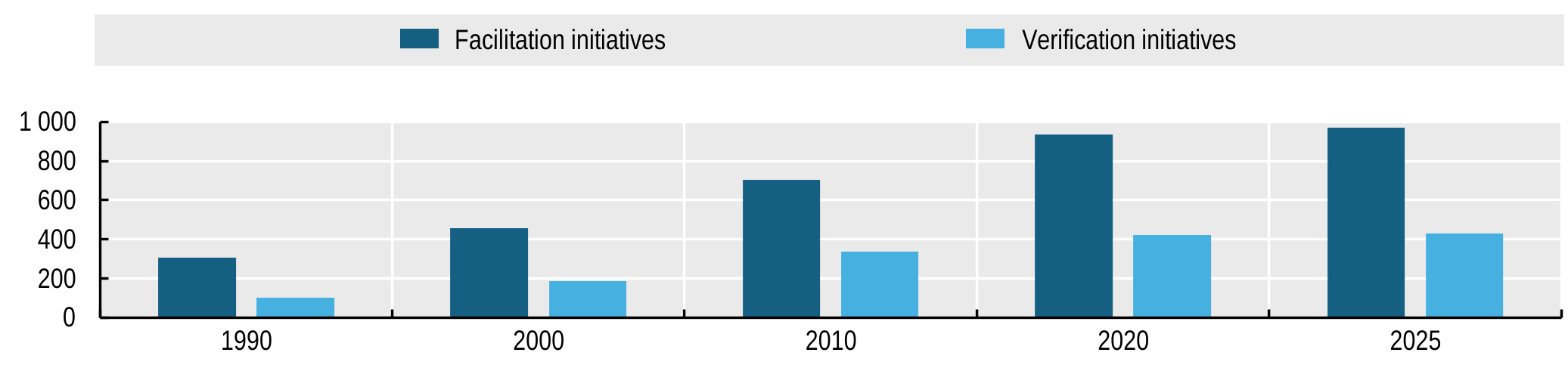
Note: This figure shows the cumulative number of sustainability initiatives by function, based on the year in which each initiative was founded. Facilitation includes functions such as guidance, training, sector dialogues, risk monitoring, complaints handling and reporting frameworks; verification includes assessments, audits, certification, or benchmarking. Many initiatives perform multiple functions, so totals by function exceed the number of unique initiatives in each year. See OECD/ITC (2024[18]) for more details on the terms facilitation and verification. Figures are based on preliminary results from OECD research piloting an AI-assisted methodology for mapping sustainability initiatives in corporate disclosures and may be refined as the methodology and dataset are further developed. The dataset is derived from initiatives referenced in company disclosures between 2020 and 2025 and may therefore underrepresent initiatives that ceased operations or lost prominence before 2020. As a result, part of the observed upward trend may reflect survivorship and visibility effects, rather than only an increase in the absolute number of initiatives over time.
Source: OECD Sustainability Initiative Dataset.
Around 970 (89%) of the identified initiatives include facilitation components, while approximately 430 (39%) conduct assessments and/or certification. As such, many initiatives conduct a mix of verification and facilitation activities. The number of identified initiatives has grown steadily over the past two decades, increasing from around 500 in 2000 to approximately 1 050 in 2020 (Figure 2.9). This expansion reflects the diverse and dynamic nature of the landscape, with initiatives frequently updating their activities, standards, and governance structures (OECD/ITC, 2024[18]; OECD, 2022[19]).
Large listed companies draw on a wide range of sustainability initiatives, highlighting both the density and influence of the initiatives ecosystem. On average, companies reference 24 different initiatives in their disclosures, with some citing nearly 100. At the same time, some individual initiatives command substantial market coverage: the Carbon Disclosure Project is referenced by firms representing 71% of the market capitalisation of the top 500 companies, while cross-sectoral initiatives such as the Forest Stewardship Council are cited by 50% of the market capitalisation. Sector-specific initiatives, such as the Responsible Business Alliance show similarly high uptake, being referenced by up to 80% of market capitalisation in select sectors such as mining. These patterns suggest that companies rely on numerous initiatives and that a small sub-set of them may exert significant influence across global markets.
For more information on the OECD’s work on sustainability initiatives, visit https://www.oecd.org/en/topics/sub-issues/due-diligence-guidance-for-responsible-business-conduct/sustainability-initiatives-for-responsible-business-conduct.html.
Traceability systems can enhance visibility across supply chains but come with limitations
Traceability systems – long used in the food industry for safety and rapid recall capabilities – are increasingly being adopted and invested in by a wide range of other industries to support their supply chain due diligence and respond to regulatory requirements.
Traceability refers to the capacity to track and verify the following core data elements along the supply chain: origin, geographical path, chain of custody, and physical evolution (OECD/IEA, 2025[13]). Some traceability mechanisms can also be used to transmit information on risks in a product’s supply chain and to what extent suppliers may have addressed them (e.g. water consumption or greenhouse gas emissions) or on product quality (e.g. engineering specifications or purification levels).
“Traceability” as a term is often used as shorthand for a range of supply chain transparency measures including supply chain mapping and auditing. However, importantly, traceability does not usually provide information on the circumstances under which products are produced, traded or sold. Thus, while tracing materials can be a tool for enhancing visibility into supply chains, it is not enough to identify or address risks and impacts.
Full tracing of materials in supply chains is also unlikely to be possible nor financially viable in most cases due to various challenges. Implementation costs can be high. A variety of data collection models prevail, resulting in a lack of interoperability along the supply chain and impeding the seamless flow of data between companies. Supply chain actors may also have limited incentives to share information, including due to commercial confidentiality concerns and to legislation preventing information-sharing. Data quality and accuracy remain a challenge for the overall reliability of traceability systems, especially in jurisdictions with weak governance. Additionally, traceability is not always practically feasible, for example where materials are mixed e.g. at the processing phase of minerals and ores or in some agricultural commodities, such as cotton.
Risk-based approaches to traceability, when warranted (e.g. because of higher risks in supply chains, regulatory compliance or strategic access considerations), paired with robust supply chain transparency systems (e.g. traditional chain of custody documentation), can play a role in helping companies identify and respond to adverse impacts in segments beyond tier 1 of their supply chain. However, any policy approach to traceability should balance its advantages with ensuring expectations are reasonable and proportionate for business.
Companies commonly report that they engage with stakeholders, few do so on issues related to human rights impacts
Stakeholder engagement, a due diligence measure in itself, is important for identifying and assessing adverse impacts and risks. Stakeholder engagement enables businesses to obtain information on actual or potential adverse impacts directly from relevant stakeholders, particularly on human rights issues that may not be readily observable through desk-based research or through publicly available sources. Meaningful engagement with workers, trade unions, affected communities, civil society organisations or experts can help companies understand how risks manifest in practice, validate risk assessments, triangulate information and identify impacts in higher-risk operations and supply-chain tiers.
This report uses two metrics to measure stakeholder engagement. The first indicates whether companies disclose how they engage with stakeholders, considering how they involve stakeholders in their decision‑making process and the procedures in place for engagement, with a focus on having established two‑way communication between the company and its various stakeholders; it is not specific to RBC issues or specific types of stakeholders. The second indicator measures whether the company has undertaken stakeholder engagement specifically on human rights issues, and refers to ongoing engagement with affected stakeholders or their representatives to address human rights concerns. While these two indicators can provide insights into a company’s propensity to engage with stakeholders, they do not fully measure whether engagement is meaningful.
Over half of large listed companies (52%) report conducting some form of stakeholder engagement, however, only very few (8%) state that they engage stakeholders on human rights issues specifically (Figure 2.10). Reported evidence of stakeholder engagement is most prevalent in Europe and Emerging Asia excluding China and least prevalent in the United States and China. Stakeholder engagement on human rights issues appears to be most prevalent in Developed Asia-Pacific, excluding the United States, and least prevalent in China.
The gap between the prevalence of broad stakeholder engagement and stakeholder engagement focussed on human rights issues could suggest that mainstream stakeholder engagement is often linked to broader communication and external affairs processes and may not be connected to a due diligence process aimed at seeking stakeholder input to identify and respond to impacts. This is consistent with findings from the World Benchmarking Alliance, which finds that only 13% of the 2 000 companies assessed as part of its social benchmark involve affected stakeholders in their human rights risk identification and assessment process, and only 4% involve stakeholders when deciding on responses to these risks (World Benchmarking Alliance, 2026[20]).
Over half of large listed companies report conducting stakeholder engagement but few state doing so on human rights issues.

Source: OECD Capital Market Series dataset; LSEG; FactSet; Bloomberg. See Annex A. for further details.
Prevention, mitigation and remediation of impacts are key to ensuring that RBC due diligence delivers real outcomes.
Under OECD RBC standards, companies are expected to address their adverse impacts through the adoption and implementation of prevention and mitigation measures. Furthermore, where a company has caused or contributed to an adverse impact, the company is expected to provide or co‑operate in remediation. Providing or co‑operating in effective grievance mechanisms for stakeholders to raise grievances is the other key component of remediation.
Prevention, mitigation, and remediation measures are the outcome of earlier steps in the due diligence process, notably the proper identification and assessment of risks and impacts. They depend on what the impact is and how a company is connected to it. This diversity makes it difficult to comprehensively or comparably measure uptake and implementation of prevention and mitigation actions across companies.
Notwithstanding, to better understand the uptake of prevention, mitigation and remediation measures of the largest global listed companies, the section draws on a selection of relevant indicators.
First, it considers two indicators available in the context of health and safety in own operations, namely 1) the adoption of health and safety management systems; and 2) whether a company has involved staff in safety improvement initiatives – for example through employee health and safety committees. The latter serves as a proxy for stakeholder engagement specifically as part of impact prevention and mitigation (Figure 2.11).
Second, three specific indicators related to prevention and mitigation in the supply chain are analysed, namely: 3) supplier training on sustainability topics; 4) the integration of social supply chain policies into companies’ purchasing policies, daily activities (e.g. contract management) and training of purchasing teams – arguably a proxy for whether companies integrate RBC into their purchasing practices – and 5) whether companies disclose improvements in health and safety in the supply chain (Figure 2.12).
Third, to assess company remediation practices the section looks at indicators related to 6) having formal grievance mechanisms that cover human rights explicitly, guarantee confidentiality or anonymity and are available to both internal and external stakeholders; and 7) whether a company commits to provide remediation to affected stakeholders where it has been identified that it has caused or contributed to human rights impacts (Figure 2.13).
Fourth, this section looks at indicators measuring whether companies disclose that they are willing to end a business relationship with a sourcing partner if 8) environmental or 9) human rights criteria are not met (Figure 2.14).
While almost half of companies have established health and safety management systems, far fewer involve employees in safety improvement initiatives
In the context of health and safety, there seems to be a substantial gap between companies reporting on their adoption of management systems (46%), and on the participation of staff in safety improvement initiatives (18%) (Figure 2.11).
Disclosure of health and safety management systems is most prevalent in Emerging Asia excluding China, followed by Europe and Latin America, and lowest in China. The share of companies reporting on staff participation in health and safety improvement initiatives is highest in Latin America, followed by Developed Asia-Pacific excluding the United States, and lowest in China. Disclosure rates for both health and safety practices are highest in the energy, utilities and basic materials sectors, and lowest in the financial sectors, which may partially reflect differences in sector risk profiles.
While these indicators are specific to the topic of health and safety, they signal a potential under-use of stakeholder engagement as part of prevention and mitigation activities.
While more than 45% of companies have established health and safety management systems, fewer than 20% involve employees in safety improvement initiatives.

Source: OECD Capital Market Series dataset; LSEG; FactSet; Bloomberg. See Annex A. for further details.
Uptake of prevention and mitigation measures in the supply chain is low across the board
Disclosure of prevention and mitigation measures in the supply chain is generally low. One‑quarter of companies report providing training or collaborating with suppliers to improve their performance on environmental and social issues (Figure 2.12). Fewer than one in ten companies (7%) integrate their social supply chain policy into their purchasing practices. Strikingly, only 3% of companies appear to have disclosed health and safety improvements in their supply chains. This low observed disclosure rate may be partly explained by the fact that outcome metrics are generally less reported on and measured than input-based metrics, even though outcome metrics are key to tracking the effectiveness of company due diligence (see also section on Communicating on how impacts are addressed).
Of the three specific prevention and mitigation measures considered, supplier training is the most widely reported on (25%). Disclosures of social supply chain policy integration into purchasing practices (7%) and health and safety improvements in the supply chain (3%) are far less prevalent.

Note: H&S = health and safety.
Source: OECD Capital Market Series dataset; LSEG; FactSet; Bloomberg. See Annex A. for further details.
Reported uptake of supplier training is highest in utilities (36%) and consumer non-cyclicals (34%) and lowest in the financial sector (13%). Disclosure of social supply chain policy integration into purchasing practices ranges from 1% of companies in the financial sector – where many risks lie downstream (e.g. in association with investee companies) – to 12‑13% in consumer non-cyclicals and consumer cyclicals; the latter includes the garment sector, where responsible purchasing practices are an important measure to prevent contribution to adverse impacts (OECD, 2018[21]).10 Disclosure of supply chain improvements in health and safety is most prevalent in the energy and technology sectors (4‑5%) and, as with other supply chain measures, least prevalent in the financial sector (1%).
Disclosure of prevention and mitigation measures in the supply chain is uneven across regions, with the prevalence of supplier training highest in Europe (38%), followed by Latin America (36%) and lowest in China and the Middle East and Africa (15‑16%). Reporting on social supply chain policy integration into purchasing practices is most common in Developed Asia-Pacific excluding the United States (14%) and Europe (12%), and lowest in Emerging Asia excluding China (3%), the Middle East and Africa (3%) and China (2%). Disclosure of health and safety improvements in the supply chain is most widespread in Europe (6%) and Developed Asia-Pacific excluding the United States (5%), and least common in China (1%), the Middle East and Africa (2%) and Latin America (3%).
Uptake of remediation measures is limited, with higher rates of implementation amongst larger companies
The reported prevalence of remediation practices is limited. Globally, 17% of companies report having a formal grievance mechanism on human rights, while 10% commit to provide remediation to affected stakeholders for human rights impacts (Figure 2.13). The prevalence of grievance mechanisms is highest in Emerging Asia excluding China and is lowest in China. Commitments to remedy are most common in Developed Asia-Pacific excluding the United States and least prevalent in China. However, uptake is substantially higher when measured by market capitalisation: reported grievance mechanism adoption rises from 17% of companies to 41% by market capitalisation globally and from 10% to 32% for commitments to remedy, suggesting that the largest companies are driving reported uptake of these practices. This divergence is especially pronounced in the United States with regards to commitments to remedy: while 6% of companies report having such commitments, their coverage by market capitalisation is six times higher (37%).
Public commitments to remedy are less prevalent than the existence of grievance mechanisms.

Source: OECD Capital Market Series dataset; LSEG; FactSet; Bloomberg. See Annex A. for further details.
About a quarter of companies report that they are willing to disengage from a supplier if environmental or human rights criteria are not met
According to OECD standards on RBC, disengagement from a business relationship may be appropriate either after failed attempts at mitigation, or where the enterprise deems mitigation not feasible, or because of the severity of the adverse impact. However, where it is possible for enterprises to continue the relationship and demonstrate a realistic prospect of, or actual improvement over time, such an approach will often be preferable to disengagement.
Respectively, 24% and 22% of enterprises report they are willing to disengage from a sourcing partner if environmental or human rights criteria are not met (Figure 2.14). Disclosure of willingness to disengage is highest in Europe and the United States, and lowest in China and the Middle East and Africa.
Between one‑fifth and one‑quarter of companies are willing to end a supplier relationship if environmental or human rights criteria are not met.

Source: OECD Capital Market Series dataset; LSEG; FactSet; Bloomberg. See Annex A. for further details.
These findings may indicate that many companies can be sensitive to reputational and other risks that may arise from engaging in higher risk environments.
Disengagement in the context of due diligence remains a complex and challenging area for businesses, as it is highly context dependent. Companies are often unsure whether to disengage from a business relationship and how to disengage without causing unintended adverse impacts. This is further complicated by divergent approaches on the topic in recent due diligence legislation, which can result in companies facing inherently conflicting obligations for the same issue (OECD, 2026[22]).
There is a marked discrepancy between the uptake of policies and actions to address impacts
Figure 2.15 summarises the average company’s disclosure on due diligence, measured as the percentage of practices disclosed by each company for different areas of due diligence – including policies and management systems, risk identification, tracking and reporting (“identifying impacts”), and prevention, mitigation and remediation (“addressing impacts”) and illustrates associated sectoral and regional variation.11
Disclosure of due diligence uptake displays stronger regional than sectoral variation. However, regions with high overall due diligence uptake also show substantial implementation gaps, suggesting that due diligence uptake is focussed on policies and management systems.

Note: This figure shows the average coverage of companies’ due diligence practices, relative to the set of practices measured in this report. For example, globally on average, companies report around two of nine practices related to addressing impacts, so the light blue circle represents a value of around 20%. The category “Identifying impacts” also includes measures to track and report on implementation and results, and the category “Addressing impacts” includes prevention, mitigation and remediation measures. See Annex A. for methodology.
Source: OECD Capital Market Series dataset; LSEG; FactSet; Bloomberg. See Annex A. for further details.
The uptake of due diligence practices associated with policies and management systems (45% as a share of all practices considered in this report) is much higher compared to measures related to impact identification, tracking and reporting (25%), and prevention, mitigation and remediation of impacts (around 20%) as illustrated by the distance between the light blue and dark blue circles (Figure 2.15). This suggests a substantial gap between the uptake of policies related to RBC and measures to identify and address real and potential impacts. These findings are consistent across regions and sectors. This pattern is visible both amongst large listed SOEs and non-SOEs (Box 2.4).
These findings align with previous OECD research on mineral supply chain due diligence, which found that while 50% of companies disclosed on (RBC) management systems, fewer than 20% disclosed on prevention and mitigation measures (OECD, 2022[23]).
In most regions, SOEs report higher uptake of due diligence than non-SOEs including with respect to prevention, mitigation and remediation measures.
In most regions, reported uptake of prevention, mitigation and remediation measures is higher among SOEs1 than non-SOEs (Figure 2.16). In Europe, the difference in reported uptake of prevention, mitigation and remediation practices between SOEs and non-SOEs is significantly larger than in the case of policies and management systems. Globally, the due diligence of large listed SOEs is less extensive than that of non-SOEs (Figure 2.16) because SOEs are disproportionately headquartered in China where reported uptake is markedly lower than the global average.
In most regions, due diligence uptake by large listed SOEs is similar to or higher than that of non-SOEs. However, SOEs are concentrated in China, where uptake is generally lower than in other regions, regardless of ownership.

Note: This figure shows the average coverage of companies’ due diligence, relative to the set of practices measured in this report. For example, globally on average, non-SOEs report around two of nine practices related to addressing impacts, so the first turquoise diamond in Panel C represents a value of around 20%. The category “Identifying impacts” also includes measures to track and report on due diligence implementation and results, and the category “Addressing impacts” includes prevention, mitigation and remediation measures. See Annex A. for methodology. Reported uptake by SOEs in Latin America, the United States, and the “Other” region is based on a very small number of companies, so these results should be treated with caution.
Source: OECD Capital Market Series dataset; LSEG; FactSet; Bloomberg. See Annex A. for further details.
1. State‑owned enterprises (SOEs) are defined as companies with at least 25% public-sector ownership.
This gap may reflect the journey companies go through when embedding due diligence in their operations, in that it is natural to begin with policies before moving to implementation. In this case the gap should close over time. It may also reflect the fact that introduction of policies is comparatively easier than implementation of those policies – which is markedly more complex and resource intensive, particularly in the context of supply chains. It may also reflect corporate reporting practices. Corporate sustainability reporting typically favours input-based disclosures over evidence of implementation. A review of 1 000 EU‑based sustainability reports found that while 57% reported on human rights risks, fewer than 4% reported specific actions taken to manage them (ACT, 2020[24]). This may in part be driven by market expectations in which companies operate in. A recent OECD study of the metrics used by ESG rating providers found that 68% of ESG metrics used by those providers rely on input-based datapoints, with only one‑third capturing outcomes – a structure that risks incentivising box-ticking over substantive prevention and mitigation (OECD, 2025[25]).
The gap between uptake of commitments and actions is well documented and may have implications for due diligence effectiveness
The gap between commitments and implementation is also found in other studies. For example, the 2023 Corporate Human Rights Benchmark, covering 110 of the largest apparel and extractive companies, found that while 77% committed to respecting human rights only 34% allocated clear responsibilities for day-to-day implementation and provided human rights training.12 In apparel, 93% of companies placed contractual expectations on suppliers related to human rights or gender equality, yet only 27% disclosed evidence of enabling suppliers to meet those expectations through responsible purchasing practices (World Benchmarking Alliance, 2023[26]; 2023[27]). In a similar vein, KnowTheChain benchmarks across ICT, apparel and footwear, and food and beverage sectors consistently find that companies score highest on commitment and governance, and lowest on steps that translate commitments into outcomes such as purchasing practices, freedom of association, grievance mechanisms, and remedy (KnowTheChain (2025[28]; 2023[29]; 2023[30])).13
The implementation gap between commitments and actions to implement them may have implications for the effectiveness of RBC due diligence (see Box 2.5).
The OECD is launching a database compiling studies assessing the impacts of due diligence practices and related government policies. The database contains studies from academia, international organisations and governments, including studies examining the effectiveness of various measures related to due diligence, such as supplier codes of conduct, social auditing, supplier engagement and capacity building, and participation in sustainability initiatives.
An analysis of these studies suggests that collaborative approaches – such as support to and investment in suppliers – may be more consistently associated with improvements in working conditions and environmental performance than top-down, compliance‑oriented tools such as codes of conduct, social auditing and certification. For instance, Locke, Amengual and Mangla (2009[31]) find that commitment-oriented approaches that invest in supplier capabilities and foster collaborative relationships with factory management are more likely to result in sustained improvements in working conditions, while more recent research links supplier engagement with positive impacts on suppliers’ environmental performance (Song et al., 2024[32]).
Other evidence suggests that certain tools commonly used to support due diligence may be less effective or even associated with unintended consequences in some cases. For example, supplier codes of conduct have been shown in several studies to have limited effects on empowering workers or upholding fundamental rights such as freedom of association (Barrientos and Smith, 2007[33]; Bartley and Egels-Zandén, 2015[34]). Some studies associate certifications with unintended negative consequences such as decreased agricultural yields and net-negative effects on farmer livelihoods (LeBaron and Lister, 2021[35]; Beuchelt and Zeller, 2011[36]).
Overall, the literature suggests that the design and implementation of due diligence practices play an important role in determining their effectiveness. Approaches that emphasise collaboration, capacity building and alignment of commercial practices may be more likely to support meaningful improvements than those relying primarily on compliance‑based policies and monitoring mechanisms (Locke and Romis, 2007[37]; Vaughan-Whitehead and Caro, 2017[38]). While the overall evidence base remains limited and fragmented (McCorquodale and Nolan, 2021[39]), these findings underline that companies need to carefully consider which prevention and mitigation approaches are most appropriate for the risks they face. Further research will be important to strengthen the evidence base on the effectiveness of different due diligence practices.
Note: The selection of supply chain practices is illustrative only and shaped by the available evidence. It does not cover the full breadth of due diligence as defined by OECD standards, nor is it intended to comment on the quality or effectiveness of individual practices as tools for due diligence. However, findings from individual supply chain practices may nonetheless offer valuable insights as well as methodological avenues for future research.
Source: OECD (2026[40]), OECD research hub on uptake and impact of environmental and social due diligence, https://www.oecd.org/en/data/tools/research-hub-on-the-uptake-and-impact-of-environmental-and-social-due-diligence
Under OECD RBC standards, companies are expected to publicly communicate relevant information about their due diligence processes and outcomes and, where relevant, communicate directly with impacted or potentially impacted stakeholders. This also helps stakeholders to track the enterprise’s progress and engage with it in cases of concern.
To better understand practices related to communicating on due diligence and its outcomes, this section relies on the following indicators: 1) whether companies disclose the outcomes of supplier monitoring on social issues and 2) whether companies disclose their salient human rights issues.
Reporting on certain aspects of due diligence is increasingly common but reporting on actual impacts and outcomes remains rare
Only 7% of large listed companies disclose salient human rights issues (which can be either at sector or business-level) and only 6% disclose the outcomes of their supplier monitoring process (Figure 2.17). Such disclosures are most prevalent in developed Asia-Pacific (excluding the United States) and Europe, and lowest in China, the Middle East and Africa, and the United States. This may reflect challenges associated with communicating on human rights impacts, which are often context-specific and may involve heightened reputational or liability risks, which can vary across jurisdictions.
Companies disclosing salient human rights issues and the outcomes of their supplier monitoring tend to be much larger than those not making such disclosures. There is a five‑fold difference between the share of companies disclosing their salient human rights risks and their share of market capitalisation, and a four‑fold difference in the case of findings from supplier monitoring. This pattern is particularly striking in the case of the United States, where companies disclosing their salient human rights risks account for 5% of companies but almost half of market capitalisation (a nearly ten‑fold difference).
Fewer than 10% of large listed companies identify and disclose salient industry or business-specific human rights issues.

Source: OECD Capital Market Series dataset; LSEG; FactSet; Bloomberg. See Annex A. for further details.
More generally, communicating on certain aspects of due diligence has become standard practice among most large, listed companies globally. The uptake of international sustainability reporting frameworks – requiring companies to disclose information on their due diligence processes – illustrates this trend clearly. Over 60% of companies by global market capitalisation report in line with the GRI (more than 6 500 entities) and around 10% were subject to the ESRS (at least 1 800 entities), therefore disclosing information related to due diligence processes14 aligned with international standards on RBC (OECD, 2025[1]) (see Box 3.2).
Various challenges to sustainability reporting have been documented
Various implementation challenges have been documented in relation to sustainability reporting. For example, a recent review of the first reports filed in response to the EU Corporate Sustainability Reporting Directive (CSRD) by the French Financial Markets Authority highlights issues with coherence and readability across large volumes of datapoints, suggesting many companies are still struggling to “join the dots” across narrative and metrics. While most companies define the scope of their policies, only a small minority explain how their effectiveness is monitored over time, with limited disclosure on internal controls, corrective actions, or year-on-year progress, preventing stakeholders from assessing whether actions taken are effective (AMF, 2025[41]).
Practitioners have also underscored challenges in responding to multiple disclosure or reporting expectations. Most companies disclosing sustainability information (87%) report using multiple standards and frameworks at the same time – often with overlapping or even conflicting expectations (IFAC, 2024[42]). Leading reporting frameworks and regulatory expectations differ in how materiality and/or saliency is defined and assessed, including whether it should be based on financial materiality, material impacts on people and the environment, or a combination of both. This can introduce challenges as many sustainability topics are associated with materiality gaps by reporting companies, as discussed above (see Box 2.2). Similarly, laws and frameworks also apply different prioritisation criteria and scopes. These divergences mean that risks prioritised under one regime may be out of scope under another, leading companies to report on different risks and impacts depending on the context, thereby complicating efforts to demonstrate consistent, credible and risk-based prioritisation in public disclosures.
Challenges related to assurance, which is increasingly required of sustainability disclosure, have also been raised by companies. Recent OECD research noted that in 2024, 42% of companies disclosing sustainability-related information obtained assurance of this information by an external service provider. Most companies rely on limited assurance (56%), with fewer relying on reasonable assurance (17%). Provision of assurance is high even in jurisdictions where it is neither required nor recommended (OECD, 2025[1]). Globally, more than half of the sustainability-related assurances are performed by an auditor (OECD, 2025[1]). Assurance can have important resource implications for companies. For example, EFRAG estimates that for listed companies that started reporting under the CSRD in 2025, the first-year limited assurance costs will range between EUR 108 000 and EUR 900 000 (EFRAG, 2025[43]). It can also impact how companies report – some companies have noted that assurance requirements, intended to strengthen the credibility of sustainability information, may in practice reinforce a compliance‑oriented approach that prioritises coverage over substance.
References
[24] ACT (2020), The Alliance for Corporate Transparency Research Report 2019: An analysis of the sustainability reports of 1000 companies pursuant to the EU Non-Financial Reporting Directive, https://www.sustentia.com/wp-content/uploads/2020/07/2019-Research-Report-Alliance-for-Corporate-Transparency_compressed.pdf.
[41] AMF (2025), Corporate Sustainability Reporting: The way forward, https://www.amf-france.org/sites/institutionnel/files/private/2025-10/amf_study_csrd_reporting_the_way_forward_2025.pdf.
[6] Amiraslani, H. et al. (2025), “Board Risk Oversight and Environmental and Social Performance”, Journal of Accounting and Economics, Vol. 79/2-3, https://doi.org/10.1016/j.jacceco.2024.101754.
[33] Barrientos, S. and S. Smith (2007), “Do workers benefit from ethical trade? Assessing codes of labour practice in global production systems”, Third World Quarterly, Vol. 28/4, pp. 713-729, https://doi.org/10.1080/01436590701336580.
[34] Bartley, T. and N. Egels-Zandén (2015), “Responsibility and neglect in global production networks: The uneven significance of codes of conduct in Indonesian factories”, Global Networks, Vol. 15/s1, pp. S21-S44, https://doi.org/10.1111/glob.12086.
[14] BCG (2023), Two Keys to Success in supplier risk management, https://web-assets.bcg.com/pdf-src/prod-live/how-to-mitigate-supply-chain-risk.pdf (accessed on 4 June 2026).
[15] BCI (2021), Supply Chain Resilience Report 2021, https://www.thebci.org/static/e02a3e5f-82e5-4ff1-b8bc61de9657e9c8/BCI-0007h-Supply-Chain-Resilience-ReportLow-Singles.pdf.
[36] Beuchelt, T. and M. Zeller (2011), “Profits and poverty: Certification’s troubled link for Nicaragua’s organic and fairtrade coffee producers”, Ecological Economics, Vol. 70/7, pp. 1316-1324, https://doi.org/10.1016/j.ecolecon.2011.01.005.
[11] Bpifrance, Orse and PwC (2022), RSE : la parole aux fournisseurs !, https://www.bpifrance.fr/sites/default/files/2023-01/Orse%20x%20Bpifrance%20x%20PwC_RSE%20La%20parole%20aux%20fournisseurs_2%C3%A8me%20%C3%A9dition_septembre%202022.pdf.
[17] EcoVadis (2025), Forced Labor in Global Supply Chains: A Call to Action, https://ecovadis.com/glossary/forced-labor/ (accessed on 4 June 2026).
[43] EFRAG (2025), Cost Benefit Analysis on the Draft Amended European Sustainability Reporting Standards, https://www.efrag.org/sites/default/files/media/document/2025-12/Cost-benefit%20Analysis%20on%20Draft%20Amended%20ESRS.pdf.
[4] FfB Foundation (2023), Top 10 biodiversity-impact ranking of company industries, https://www.financeforbiodiversity.org/wp-content/uploads/Top10_biodiversity-impact_ranking.pdf.
[12] German International Chamber of Commerce (2023), Das Lieferkettensorgfaltspflichtengesetz wirkt - aber vielfach nicht, wie gewünscht. [The Supply Chain Due Diligence Act is effective - but often not as desired.], https://www.dihk.de/resource/blob/97882/906311b0bf7fb8db5b1f564aed4c8d1e/sonderauswertung-lieferketten-going-international-2023-data.pdf.
[16] Hurt, J. et al. (2023), Supply Chain Due Diligence Risk Assessment for the EU: A Network Approach to estimate expected effectiveness of the planned EU directive, https://doi.org/10.48550/arXiv.2311.15971.
[42] IFAC (2024), The State of Play: Sustainability Disclosure and Assurance, https://ifacweb.blob.core.windows.net/publicfiles/2024-02/IFAC-State-Play-Sustainability-Disclosure-Assurance-2019-2022_0.pdf.
[28] KnowTheChain (2025), 2025 Information and Communications Technology: Benchmark key findings report, https://media.business-humanrights.org/media/documents/KTC_2025_ICT_Key_findings_report.pdf.
[30] KnowTheChain (2023), 2023 Apparel & Footwear: Benchmark Findings and Report, https://media.business-humanrights.org/media/documents/KTC_2023_AF_Benchmark_Report.pdf.
[29] KnowTheChain (2023), 2023 Food & Beverage: Benchmark Findings Report, https://media.business-humanrights.org/media/documents/KTC_2023_FB_Benchmark_Report_Oct_23.pdf.
[7] KPMG (2023), ERM’s role in ESG: How Enterprise Risk Management can help companies craft and execute ESG strategies, https://kpmg.com/kpmg-us/content/dam/kpmg/pdf/2023/erms-role-in-esg-pov-whitepaper-v3.pdf.
[35] LeBaron, G. and J. Lister (2021), “The hidden costs of global supply chain solutions”, Review of International Political Economy, Vol. 29/3, pp. 669-695, https://doi.org/10.1080/09692290.2021.1956993.
[31] Locke, R., M. Amengual and A. Mangla (2009), “Virtue out of Necessity? Compliance, Commitment, and the Improvement of Labor Conditions in Global Supply Chains”, Politics & Society, Vol. 37/3, pp. 319-351, https://doi.org/10.1177/0032329209338922.
[37] Locke, R. and M. Romis (2007), “Improving Work Conditions in a Global Supply Chain”, MIT Sloan Management Review, https://sloanreview.mit.edu/article/improving-work-conditions-in-a-global-supply-chain/.
[39] McCorquodale, R. and J. Nolan (2021), “The Effectiveness of Human Rights Due Diligence for Preventing Business Human Rights Abuses”, Netherlands International Law Review, Vol. 68/3, pp. 455-478, https://doi.org/10.1007/s40802-021-00201-x.
[22] OECD (2026), Mapping social and environmental due diligence legislation, OECD Publishing, Paris, https://doi.org/10.1787/bac11241-en.
[40] OECD (2026), OECD research hub on uptake and impact of environmental and social due diligence, https://www.oecd.org/en/data/tools/research-hub-on-the-uptake-and-impact-of-environmental-and-social-due-diligence.
[25] OECD (2025), Behind ESG ratings: Unpacking sustainability metrics, OECD Publishing, Paris, https://doi.org/10.1787/3f055f0c-en.
[3] OECD (2025), Environmental and social impacts across industry sectors, OECD Publishing, Paris, https://doi.org/10.1787/dd39761c-en.
[1] OECD (2025), Global Corporate Sustainability Report 2025, OECD Publishing, Paris, https://doi.org/10.1787/bc25ce1e-en.
[8] OECD (2024), Global Corporate Sustainability Report 2024, OECD Publishing, Paris, https://doi.org/10.1787/8416b635-en.
[5] OECD (2023), OECD Guidelines for Multinational Enterprises on Responsible Business Conduct, OECD Publishing, Paris, https://doi.org/10.1787/81f92357-en.
[23] OECD (2022), Monitoring corporate disclosure: Assessing company reporting on mineral supply chain due diligence, OECD Publishing, Paris, https://doi.org/10.1787/246e3535-en.
[19] OECD (2022), The role of sustainability initiatives in mandatory due diligence: Background note on Regulatory Developments concerning Due Diligence for Responsible Business Conduct, https://www.oecd.org/content/dam/oecd/en/topics/policy-sub-issues/due-diligence-guidance-for-responsible-business-conduct/the-role-of-sustainability-initiatives-in-mandatory-due-diligence-note-for-policy-makers.pdf.
[2] OECD (2018), OECD Due Diligence Guidance for Responsible Business Conduct, OECD Publishing, Paris, https://doi.org/10.1787/15f5f4b3-en.
[21] OECD (2018), OECD Due Diligence Guidance for Responsible Supply Chains in the Garment and Footwear Sector, OECD Publishing, Paris, https://doi.org/10.1787/9789264290587-en.
[13] OECD/IEA (2025), The role of traceability in critical mineral supply chains, OECD Publishing, Paris, https://doi.org/10.1787/edb0a451-en.
[18] OECD/ITC (2024), Understanding Sustainability Initiatives: A Typology Framework, OECD Publishing, Paris, https://doi.org/10.1787/8f8a3d7f-en.
[10] S&P Global (2025), Addressing inefficiencies in sustainable supply chain management, https://www.spglobal.com/sustainable1/en/insights/special-editorial/addressing-inefficiencies-in-sustainable-supply-chain-management (accessed on 4 June 2026).
[32] Song, F. et al. (2024), “Improving suppliers’ environmental performance: The role of environmental engagement and relationship asymmetries”, International Journal of Integrated Supply Management, Vol. 17/3/4, pp. 239-276, https://doi.org/10.1504/ijism.2024.142780.
[38] Vaughan-Whitehead, D. and L. Caro (2017), Purchasing practices and working conditions in global supply chains: Global Survey results, https://www.ilo.org/publications/purchasing-practices-and-working-conditions-global-supply-chains-global.
[9] WBA (2026), Supply chain resilience at risk as human rights, climate and nature impacts go unmanaged, https://www.worldbenchmarkingalliance.org/supply-chain-resilience-risk-human-rights-climate-and-nature-impacts-go-unmanaged (accessed on 4 June 2026).
[20] World Benchmarking Alliance (2026), Social Benchmark, https://www.worldbenchmarkingalliance.org/benchmark/social-benchmark (accessed on 4 June 2026).
[26] World Benchmarking Alliance (2023), Corporate Human Rights Benchmark 2023: Insights Report, https://assets.worldbenchmarkingalliance.org/app/uploads/2024/03/2023_Corporate_Human_Rights_Benchmark__Insights_Report_13Mar2024.pdf (accessed on 4 February 2026).
[27] World Benchmarking Alliance (2023), Gender Insights Report 2023, https://assets.worldbenchmarkingalliance.org/app/uploads/2024/05/2023-Gender-Insights-Report-3-May-2024.pdf (accessed on 4 February 2026).
← 1. Small-cap companies are defined as having a market capitalisation below USD 2 billion at end‑2025; mid-caps as between USD 2 billion and USD 10 billion; and large‑caps as above USD 10 billion.
← 2. State‑owned enterprises (SOEs) are defined as companies with at least 25% public-sector ownership.
← 3. The purpose of the cross-cutting policy indicator is to identify companies that have policies covering a wide range of topics. Biodiversity commitments are not considered as they have very low reported uptake. Therefore, including them in the scope of the cross-cutting policy indicator would significantly limit its prevalence and result in uptake roughly equivalent to the share of companies with public biodiversity commitments. As such, to measure uptake by companies of an otherwise wide range of issues in their policies, biodiversity commitments have been excluded.
← 4. Human capital accounted for the largest share, but this has no clear mapping to any of the topics in Figure 2.1.
← 5. The observed difference in disclosure rates between both topics might also be related to measurement. For instance, public reporting related to climate change is more established than on biodiversity (e.g. recommendations from the Taskforce on Nature‑related Financial Disclosures (TNFD) were published in 2023, six years after those of the Task Force on Climate‑related Financial Disclosures (TCFD)). As a result, company disclosures related to climate change may be more comparable across companies and it may therefore be more feasible to reliably identify them at scale than those disclosures related to biodiversity.
← 6. In the case of human rights, the indicator measures whether the company uses human rights criteria in the selection or monitoring process of its suppliers, but in the case of environmental criteria, the indicator only considers the selection process.
← 7. This data was available for a small sub-sample of the largest 10 000 companies. Coverage of this data varies depending on the supply chain tier and represents up to around 450 companies. Given the lower coverage of this data, rates of uptake were expressed as a percentage of companies for which data is available, and are based on latest available data between 2021 and early 2026.
← 8. Data on this indicator was available for a small sub-sample of the largest 10 000 companies (around 500 companies), in industries which source from the mining sector. Given the lower coverage of this data, rates of uptake were expressed as a percentage of companies in this sub-sample, and are based on latest available data between 2021 and early 2026.
← 9. Some companies’ social audit programmes cover more than one tier. Overall, around 35% of companies cover tier‑2 or tier‑3 suppliers (or both) in their social audit programmes.
← 10. While the indicator used here is the closest available indicator to purchasing practices, it is important to note that it does not fully capture the essence of responsible purchasing practices. Rather, it may provide a partial indication of whether companies integrate purchasing practices in their due diligence.
← 11. See Annex A for more details on the methodology.
← 12. All top ten companies allocated clear responsibilities and training on human rights, and only 27% of the other 100 did (World Benchmarking Alliance, 2023[26]). In other words, 34% (37 out of 110) of the companies assessed in the benchmark.
← 13. These benchmarks include 45 companies in the ICT sector, 65 companies in the apparel and footwear sector, and 60 companies in the food and beverage sector.
← 14. Further, 4 857 companies and 3 497 companies are reporting against the TCFD and SASB standards respectively, i.e. providing general information about financially material risks including climate‑related risks (OECD, 2025[1]).